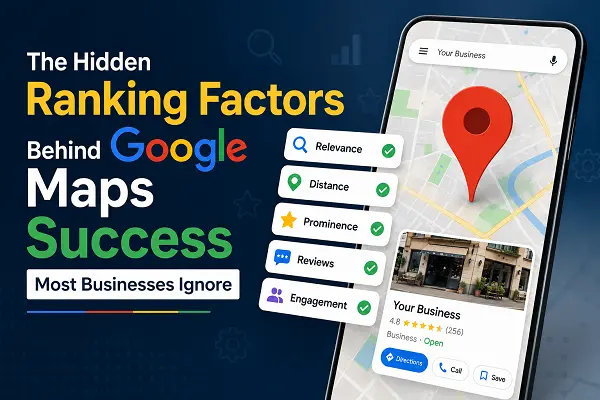
Securing a spot in the Google Maps Map Pack requires moving beyond basic profile completion. While generic optimization advice focuses heavily on primary categories and business titles, the local algorithm relies on subtle, sophisticated data patterns. Understanding these overlooked ranking signals allows local companies to outperform competitors who rely solely on basic setups.
1. User Behavioral Patterns and Real-Time Interaction Metrics
Google monitors how searchers interact with a listing to determine its true real-time utility. Static information matters less than active user engagement, which signals authentic local popularity.
-
Driving Direction Requests: Multiple users requesting navigation from diverse geographic start points tell the algorithm that a business is a highly sought-after local destination.
-
The Click-to-Call Velocity Ratio: High frequencies of phone calls initiated directly from mobile search results prove immediate local intent and customer satisfaction.
-
Listing Dwell Time: When users linger on a profile to browse menus, updates, or photos, the prolonged attention indicates high-quality, relevant content.
-
Organic Branded Search Volume: An increase in searches for a specific business name combined with a geographic location strengthens the overall authority of the map placement.
2. Advanced Digital Footprint Matching and Local Entity Validation
Local rankings are deeply tied to how consistently an entity exists across the broader web ecosystem. Google validates a physical business by cross-referencing information far beyond the standard business dashboard.
-
Unstructured Citation Context: Beyond formal directories, text mentions on local blogs, neighborhood news sites, and regional community forums establish geographic relevance.
-
Hyperlocal Schema Markup Implementation: Embedding precise geographical coordinates, department details, and operational hours into the website’s underlying code confirms data legitimacy.
-
Inbound Link Diversity from Regional Vectors: Backlinks originating from nearby chamber of commerce sites, local sports teams, or regional suppliers pass high-value proximity authority.
-
Review Sentiment Specificity: Algorithms parse the actual nouns and adjectives used within user feedback to associate specific services and neighborhoods with a business entity.
3. High-Velocity Media Optimization and Metadata Signals
Visual assets act as automated trust verification tools for search algorithms. Raw image files uploaded directly from mobile devices contain embedded exchangeable image file format (EXIF) data, including automatic timestamping and precise satellite positioning tags. This background data acts as independent verification that a business operates actively at its stated address.
Furthermore, user-generated images carry immense algorithmic weight compared to staged, professional corporate photography. Encouraging customers to upload unedited mobile photos directly to the listing creates an authentic, high-velocity stream of fresh visual data that keeps the profile relevant in competitive markets.
Conclusion
Dominating the Google Maps landscape requires a holistic approach to local digital presence. True optimization lies in generating organic user actions, maintaining a deeply integrated regional web footprint, and consistently feeding the algorithm verified real-world data points.
FAQs
What is the most critical user action for Google Maps ranking?
Requesting driving directions from various locations is a powerful signal. It demonstrates that consumers are willing to travel to a physical location, confirming its real-world relevance.
Do stock photos harm local map listings?
Yes, generic stock imagery lacks unique metadata and reduces authentic engagement. Original imagery taken on-site provides algorithmic proof of true location operations.
How do website back-links affect Google Maps visibility?
Links from authoritative local organizations, like regional blogs or neighborhood associations, tell the algorithm that a business is a trusted fixture within that specific community.
What are unstructured citations?
Unstructured citations are plain-text mentions of a business name, address, or phone number within online content like local news articles, rather than traditional business directories.
Why do some businesses with fewer reviews outrank competitors?
Rankings rely heavily on proximity, contextual relevance, and active user engagement. A profile with fewer reviews can win if it possesses stronger behavioral signals and deeper local optimization.