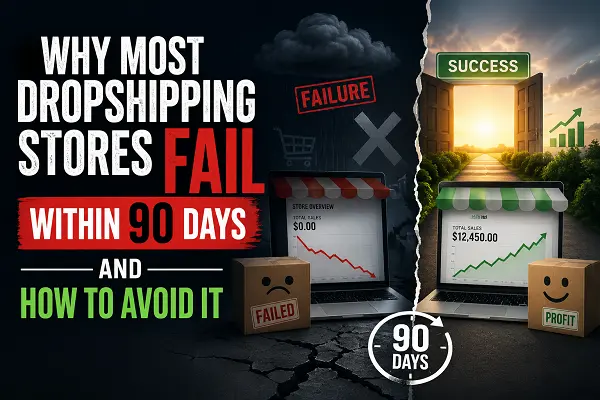
The allure of dropshipping is undeniable. Low upfront costs, minimal inventory risk, and the promise of location independence drive thousands of entrepreneurs to launch online storefronts every day. Yet, a stark reality awaits most newcomers: roughly 90% of dropshipping businesses shut down within their first three months.
This high failure rate does not mean the business model is dead. Instead, it indicates that most beginners treat dropshipping as a get-rich-quick scheme rather than a legitimate retail operations framework. Surviving the critical 90-day window requires moving past basic tutorials and understanding the structural traps that sink new stores.
The Core Pitfalls That Sink New Stores in 3 Months
Many store owners launch with great enthusiasm but quickly realize that a live website does not guarantee revenue. The initial 90 days test a business’s operational foundation, and several common missteps lead to early closure:
-
Saturated Product Selection: Relying on generic, mass-market items that hundreds of other stores sell leads to instant invisibility. Competing solely on price with established giants like Amazon destroys profit margins.
-
Poor Supplier Selection: Partnering with unverified suppliers results in slow shipping times, damaged goods, and mismatched packaging. In ecommerce, a bad supplier directly translates to a bad customer experience.
-
Fragile Profit Margins: Failing to calculate the total cost of goods sold (COGS)—including ad spend, platform transaction fees, returns, and payment processing fees—leads to hidden financial losses.
-
Subpar Website User Experience: Using free templates without customization creates an untrustworthy environment. Customers hesitate to enter credit card details on sites with broken links, pixelated images, or generic text.
How to Build a Sustainable Dropshipping Infrastructure
Overcoming the 90-day hurdle requires a pivot from a casual hobbyist mindset to an institutional business strategy. Sustainable ecommerce relies on supply chain control, data-driven marketing, and brand equity.
-
Vet Suppliers Through Sample Testing: Order products to your own doorstep before listing them. Evaluate the processing speed, packaging quality, and actual delivery timeline to ensure they match customer expectations.
-
Focus on Hyper-Niche Markets: Instead of launching a broad “home decor” store, specialize in something distinct, like ergonomic office accessories for remote developers. Narrow targeting reduces ad costs and increases conversion rates.
-
Prioritize Long-Term Customer Retention: Acquire customers with the intent of keeping them. Build email marketing flows for abandoned carts, post-purchase follow-ups, and loyalty discounts to maximize lifetime value.
-
Factor In a Refund Buffer: Allocate 5% to 10% of revenue into a separate reserve account specifically to handle chargebacks, returns, and broken items without disrupting daily cash flow.
Shifting from a Middleman to a Value-Driven Brand
The fundamental flaw of traditional dropshipping is the lack of perceived value. If a customer can find the exact same item cheaper on a major marketplace, your store serves no purpose. Survival past 90 days requires adding a layer of unique value between the supplier and the consumer.
This value can manifest as expert curation, custom bundle offers, superior educational content, or unmatched customer support. When you solve a specific problem or provide an elevated buying experience, you escape the trap of commodity price wars. Successful modern dropshippers often transition into private labeling, where they customize the product packaging or design to establish true brand equity.
Conclusion
Dropshipping stores fail within 90 days not because the model is broken, but because the execution is often shallow. Longevity in ecommerce belongs to those who invest time in rigorous product research, build robust supplier relationships, and treat customer service as a primary growth driver. By treating your store as a sustainable brand rather than a short-term experiment, you position yourself well ahead of the competition.
FAQs
Why do slow shipping times kill dropshipping businesses?
Modern consumers expect fast delivery. When a store takes two to four weeks to ship an item, it triggers customer anxiety, leading to a flood of support emails, chargebacks, payment processor holds, and negative reviews that halt business operations.
How much capital is realistically needed to start?
While the storefront itself is inexpensive, a realistic launch requires funding for high-quality marketing, product samples, and software applications. Starting with less than $1,000 often leaves owners unable to optimize their advertising campaigns.
Can I still succeed using major standard marketplaces as suppliers?
It is increasingly difficult. Standard retail platforms often include their own branded packaging, which confuses customers, violates terms of service on major platforms, and offers minimal profit margins due to retail price markups.
What is the healthiest profit margin for a dropshipping item?
Aim for a gross profit margin of at least 40% to 70%. This buffer ensures that after deducting advertising costs, transaction fees, platform subscriptions, and shipping fees, the net margin remains profitable.
How do I handle product returns effectively?
Establish a clear return policy before launching. Have customers ship returns to a local address or your home for inspection, or offer a replacement without requiring a return if the item cost is lower than the return shipping fee.