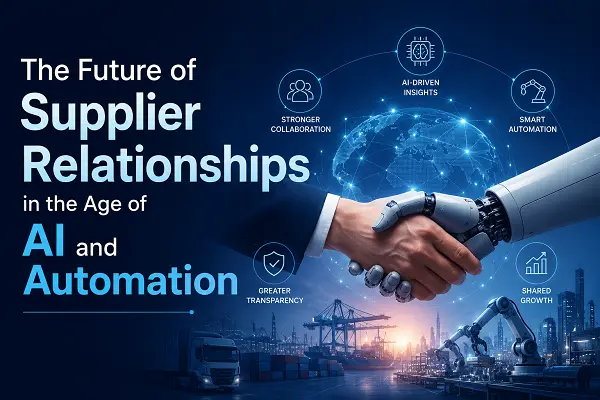
The landscape of procurement is undergoing a massive shift. While traditional supply chain management relied heavily on manual data entry, reactive troubleshooting, and adversarial negotiations, automation and artificial intelligence are introducing a collaborative era. Technology is not replacing the human element in procurement; instead, it is freeing professionals to focus on strategic, long-term partnerships.
Moving Beyond Transactional Procurement
AI-driven tools are fundamentally shifting how companies interact with their vendors. By automating routine administrative tasks, organizations can transition from rigid, contract-enforced transactions to fluid, value-driven alliances.
-
Automated Contract Compliance: Natural language processing algorithms monitor contract terms in real-time, instantly flagging deviations in pricing or delivery schedules without human intervention.
-
Predictive Risk Mitigation: Machine learning models analyze global logistics data, weather patterns, and geopolitical shifts to forecast supply disruptions before they impact production.
-
Dynamic Performance Tracking: Automated dashboards aggregate delivery times, quality scores, and compliance metrics, eliminating subjective evaluation bias.
-
Frictionless Onboarding: Automated workflows verify vendor credentials, tax documentation, and financial stability, shrinking the time-to-onboard from weeks to days.
Designing High-Trust Ecosystems
Trust remains the cornerstone of resilient supply chains. The integration of advanced automation systems enhances transparency, allowing both buyers and suppliers to operate from a single, unassailable source of truth.
-
Shared Demand Forecasting: AI engines analyze real-time market signals and consumer trends, passing accurate demand data down the supply chain so vendors can optimize their inventory levels.
-
Collaborative Product Innovation: Shared digital workspaces allow suppliers to contribute directly to early-stage product designs, optimizing components for manufacturability and cost efficiency.
-
Synchronized Cash Flows: Automated invoice processing and smart contract execution ensure suppliers receive payments immediately upon meeting pre-defined milestones, strengthening financial trust.
-
Carbon and ESG Alignment: Automated tracking systems capture scope 3 emissions and environmental data, helping both parties meet stringent compliance standards seamlessly.
Cultivating the Strategic Human Element
As operational tasks become fully automated, the procurement professional’s role pivots toward relationship management, negotiation strategy, and cultural alignment.
Machines excel at processing structured data and identifying patterns, but they lack the capacity for empathy, nuanced cultural understanding, and creative conflict resolution. Future-proof procurement teams are shifting their energy away from managing spreadsheets and redirection it toward face-to-face strategic alignment. Organizations that utilize AI to handle analytical heavy lifting can dedicate human ingenuity to co-investing in new technologies, navigating complex regulatory shifts, and building cross-border alliances that a software program cannot replicate.
Conclusion
The future of supplier management belongs to organizations that successfully combine algorithmic precision with human relationship skills. Automation handles the administrative baseline, while artificial intelligence provides the predictive insights necessary to navigate volatile global markets. By removing administrative friction, businesses can transform their vendor base from a simple cost center into a powerful engine of shared innovation and long-term resilience.
Frequently Asked Questions
Will AI completely eliminate human roles in procurement?
No. AI automates repetitive data processing, inventory tracking, and compliance monitoring. This shifts the human role toward strategic negotiation, relationship building, and collaborative innovation.
How does automation improve supplier trust?
Automation creates a transparent, shared data environment. When payment cycles, performance metrics, and inventory levels are handled by objective, automated systems, disputes decrease and trust grows.
Can small suppliers keep up with AI adoption?
Yes, because many enterprise AI tools offer lightweight, cloud-based portals for vendors. Small suppliers do not need complex infrastructure; they simply interface with the buyer’s automated ecosystem.
How does AI help with supply chain disruptions?
AI analyzes massive datasets, including weather, port congestion, and economic indicators. It identifies potential bottlenecks early, allowing businesses to pivot to alternative suppliers proactively.
What is the biggest challenge in adopting AI for supplier relations?
Data fragmentation is the primary hurdle. AI systems require clean, centralized, and standardized data from both the buyer and the supplier to generate accurate, actionable insights.