
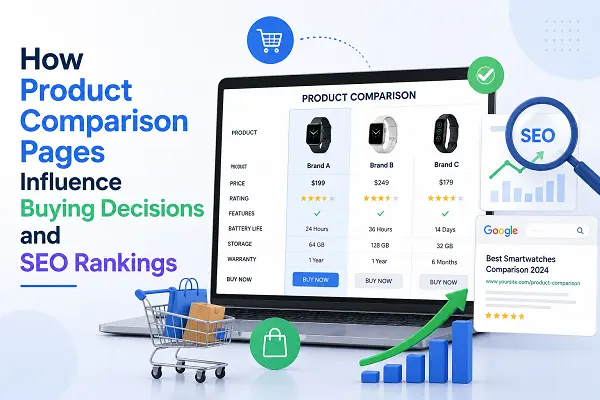
Product comparison pages serve as critical decision-making hubs for online shoppers. When consumers reach the final stages of the marketing funnel, they look for objective clarity rather than promotional pitches. By structuring clear side-by-side evaluations, these pages directly target commercial search intent, helping users weigh their choices with minimal effort. This process streamlines the user journey and translates directly into stronger search visibility and higher conversion rates.
How Comparison Content Shapes Consumer Choices
Shoppers frequently face choice paralysis when presented with multiple similar products. A well-constructed comparison page eliminates this friction by organizing complex product details into digestible formats. When users can view differences in functionality, value, and design in one central location, their path to purchase becomes clear.
-
Reduces Cognitive Load: Grouping key features logically prevents users from opening dozens of browser tabs to research individual models.
-
Validates Purchasing Decisions: Clear breakdowns of pros and cons reassure buyers that they are making an informed choice, reducing post-purchase regret.
-
Captures High-Intent Traffic: Users searching for comparative terms are typically ready to buy, meaning these pages attract traffic that converts at a much higher rate than top-of-funnel informational content.
-
Establishes Brand Neutrality: Presenting balanced, honest overviews builds long-term consumer trust, making the hosting platform a preferred source for future research.
The Technical SEO Benefits of Comparative Architecture
From an organic search perspective, comparison pages are highly efficient tools for building topical authority. Search engines prioritize sites that thoroughly satisfy user queries within a single session. When a page answers specific, detailed questions about product variations, it signals to search algorithms that the domain possesses deep subject-matter expertise.
-
Improves Engagement Metrics: Clear, structured comparisons naturally hold user attention, which increases dwell time and lowers bounce rates.
-
Optimizes Long-Tail Keyword Targeting: Comparative queries naturally incorporate specific, low-competition phrases that are easier to rank for than broad terms.
-
Earns Search Visibility via Rich Snippets: Structured information makes it easier for search crawlers to understand page context, increasing the likelihood of winning featured snippets and placement in interactive AI search answers.
-
Strengthens Internal Linking Structures: These hubs provide natural opportunities to link back to individual product pages, distributing link equity across the entire website.
Aligning Comparison Pages with Modern Evaluation Standards
Modern search algorithms prioritize user-centric value and verified knowledge over keyword density. Pages that rely on superficial descriptions or scraped data consistently lose visibility. To maintain strong search performance, comparison content must demonstrate authentic, firsthand understanding of the items in question.
Focusing on unique insights, accurate specifications, and real-world application ensures that the content satisfies the strict quality benchmarks set by search engines. Providing genuine clarity instead of generic summaries keeps the page competitive, authoritative, and helpful over time.
Conclusion
Product comparison pages act as a bridge between user curiosity and the final transaction. By addressing specific user needs and satisfying search engine quality requirements, these assets drive meaningful organic growth. When built with a focus on absolute clarity and structured layout, comparison content optimizes the digital user experience while securing sustainable, long-term search rankings.
Frequently Asked Questions
Why do product comparison pages convert better than standard product pages?
Comparison pages target users who have already decided to buy but need help choosing the exact model. Because these visitors are further along in the buying journey, their intent to purchase is significantly higher than that of casual browsers looking at a single product.
How do comparison hubs help lower a website’s bounce rate?
When a page answers multiple related questions at once, users do not need to return to the search results to find alternative options. This thoroughness keeps readers on the site longer, resulting in improved engagement signals.
Should an online store compare its own products against direct competitors?
Yes. Consumers will search for competitor alternatives regardless. Providing an honest, objective breakdown directly on your own domain allows you to control the narrative, build brand transparency, and keep potential buyers on your website.
What are the best keyword strategies for optimization?
Focus on natural modifiers like “versus,” “alternative,” “best,” and “difference between.” Combining these modifiers with specific product names creates long-tail keyword combinations that attract qualified buyers.
How do search engine updates affect thin comparison content?
Recent search updates actively penalize pages that merely rephrase manufacturer specifications without adding unique context. Content that lacks real insights or fails to provide a clear layout will see a decline in search visibility.