When a digital platform experiences sustained audience growth, standard web server environments often begin to show technical strain. High volumes of simultaneous database requests, complex plugin processes, and extensive media loading can quickly bottleneck standard compute cycles. For expanding web properties, hitting these performance ceilings risks introducing site latency, which immediately impacts user retention and search engine indexing efficiency.
Managed WordPress hosting addresses these challenges by replacing generic server spaces with highly specialized ecosystem infrastructure. Instead of requiring web owners to manually configure server layers, firewalls, and complex caching scripts, these premium hosts handle technical adjustments automatically at the server level. Evaluating how leading platforms manage expanding data workloads lets you safeguard your digital property against unexpected performance drops.
Technical Benchmarks That Determine Enterprise Scalability
Selecting a high-tier hosting environment requires looking beyond surface-level storage quotas. True operational scaling depends on how effectively a provider manages isolated compute structures and heavy traffic flows.
-
Compute-Optimized Cloud Architecture: Premium environments run sites on isolated, high-performance virtual machine tiers that isolate your processes from neighboring server noise.
-
Deep Edge Network Integration: Advanced systems weave enterprise-grade Content Delivery Networks (CDNs) straight into the core routing layer, caching assets instantly across worldwide nodes.
-
Dynamic Object Caching Tools: Specialized server-side databases store frequent query results in memory, preventing redundant script execution and lowering central processor strain.
-
Predictive Security Defenses: Active monitoring layers patch known plugin code vulnerabilities automatically, blocking malicious automated traffic long before it hits your site’s application layer.
Evaluating Top Hosting Environments for Expanding Digital Properties
Different enterprise hosting platforms tailor their infrastructure solutions to specific operational philosophies, development workflows, and system budgets.
-
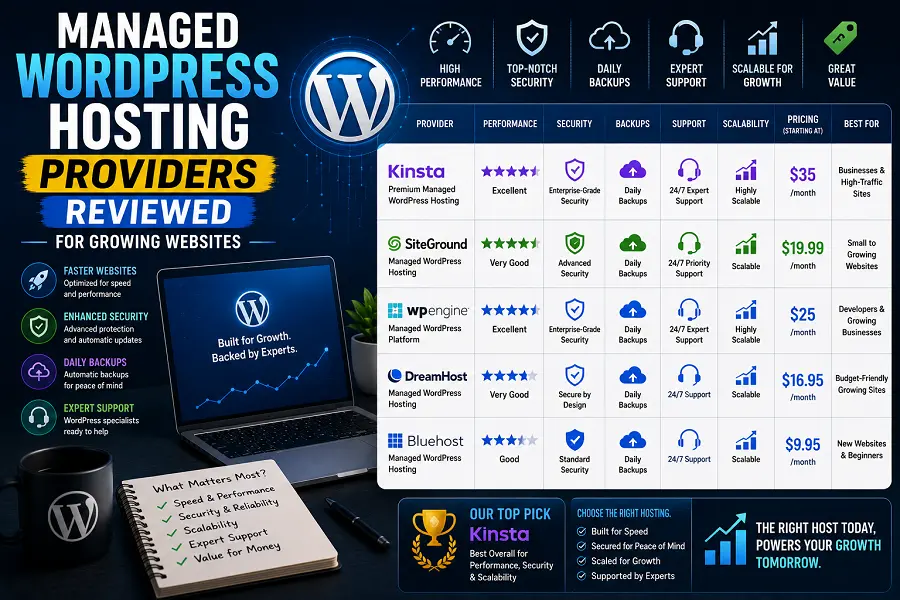
The Premium Network Specialist: This framework builds its entire ecosystem on top-tier, compute-optimized cloud infrastructure. By using advanced virtual servers and enterprise-grade network delivery paths, it delivers exceptionally low initial server response times. The custom administration panel provides clear application performance monitoring tools, making it a favorite for sites running complex, database-heavy frameworks.
-
The Developer-Centric Ecosystem: Long recognized as an industry benchmark, this provider uses custom, multi-layered caching technologies built specifically to process complex code execution. It offers web teams isolated development, staging, and live production environments that allow seamless code deployments. Advanced security layers, automated file rollbacks, and deep technical assistance make it ideal for high-volume corporate spaces.
-
The High-Velocity Content Delivery Model: This modern, rapidly expanding infrastructure option integrates your site directly with global edge delivery networks. By stripping away standard execution barriers and traditional scripting constraints, it delivers rapid page generation globally. It excels at handling sudden, massive traffic spikes seamlessly, proving highly efficient for viral media publications and fast-growing digital brands.
-
The Managed Cloud Integrator: This unique setup acts as an intelligent management layer over elite cloud networks. It gives tech-focused web administrators absolute freedom to pick their underlying hardware systems while removing complex command-line upkeep. It offers an incredibly cost-effective scaling path for businesses that want cloud-level power paired with a visual, point-and-click control panel.
Balancing Plugin Processing Demands with Database Stability
As a website grows, adding more complex functional plugins—like membership directories or active e-commerce checkouts—is often necessary. These dynamic elements require significant database interaction, bypassing standard page caching to run live server scripts for every single visitor.
A standard host frequently stumbles under this intense dynamic load, triggering database timeout errors and broken pages. Specialized managed hosting platforms solve this bottleneck by abandoning rigid backend limits in favor of fluid resource distribution. By offering dedicated processing lines and custom database architecture, these environments ensure that your shopping carts and interactive scripts process instantaneously, maintaining a stable user experience even during peak traffic hours.
Conclusion
Upgrading to a dedicated, managed WordPress server environment is a critical step in protecting a growing digital brand’s user experience. Choosing an infrastructure provider that automates system optimization, protects data continuity, and expands resource availability instantly ensures your digital asset stays fast, secure, and ready for long-term audience expansion.
Frequently Asked Questions
What makes managed WordPress hosting different from standard web hosting?
Managed hosting provides an infrastructure custom-tuned solely for WordPress execution, combining automatic platform updates, server-level caching, and pro-active security systems into a completely hands-off service.
Will migrating my expanding site to a managed platform cause temporary downtime?
No. Leading enterprise providers offer specialized white-glove migration services or automated staging plugins that move your files and database smoothly behind the scenes without disrupting active visitors.
How does high-performance managed hosting assist mobile page speeds?
By leveraging server-side edge caching and advanced content delivery networks, managed platforms minimize physical data travel distances, providing rapid initial page delivery to mobile browsers globally.
Do these premium hosting solutions include email account storage?
Most specialized managed WordPress hosts skip email hosting entirely to protect core server processing power, recommending that brands route business email through dedicated external communication suites instead.
Can a managed host handle sudden traffic spikes from viral media exposure?
Yes. Premium architectures feature auto-scaling resources or fluid processing channels that adjust capacity instantly, ensuring your pages remain online and fully operational during massive visitor surges.