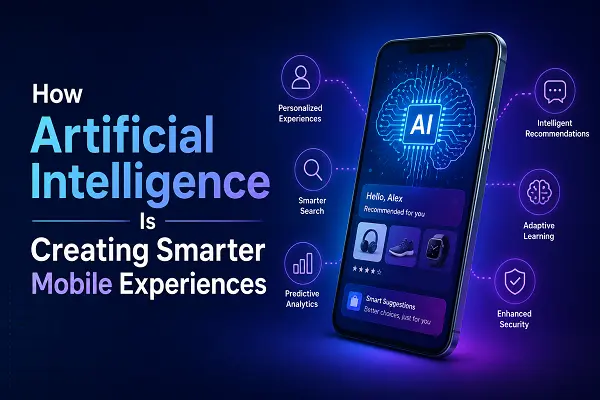

The mobile application landscape in 2026 has moved far beyond simple utility. We are currently witnessing a shift toward applications that are not just tools, but intelligent, adaptive companions. Today’s development focus centers on creating seamless, predictive experiences that prioritize user privacy, high-speed connectivity, and intuitive interaction methods.
Innovations in Intelligent App Architecture
The most significant change in 2026 is the transition from “AI-enhanced” apps to “AI-native” platforms. Developers are now baking artificial intelligence into the core architecture of their applications rather than treating it as an auxiliary feature.
-
On-Device Edge Computing: To ensure privacy and speed, the latest apps process data directly on the user’s hardware. By utilizing dedicated neural processing units, applications can run complex machine learning models without needing a cloud connection, resulting in zero-latency responses and heightened data security.
-
Predictive User Experience: Modern applications now utilize behavioral modeling to anticipate what a user needs next. By analyzing usage patterns in real-time, apps proactively pre-load content, adjust interface layouts, and suggest shortcuts before the user even initiates a request.
-
Agentic Workflows: We are seeing the rise of apps that don’t just display information but perform tasks. These autonomous agents can bridge gaps between services—such as booking a flight, scheduling local transit, and updating a calendar—all through a single, natural language prompt from the user.
-
Standardized Cross-Platform Frameworks: The inefficiency of maintaining separate codebases for iOS and Android has led to the dominance of advanced cross-platform frameworks. These tools allow for a “build once, deploy everywhere” strategy that maintains native-level performance while drastically reducing time-to-market.
Transforming User Interaction and Utility
Static interfaces are becoming relics of the past. Users now expect their applications to interact with the world around them through more natural, human-centric inputs.
-
Multimodal Interfaces: Typing is increasingly secondary to voice, gesture, and image-based commands. Users now interact with apps by speaking natural language, pointing cameras at objects for real-time identification, or using simple hand gestures to navigate 3D environments.
-
Spatial and Immersive Design: Augmented Reality (AR) has transitioned from a gaming novelty to a practical utility. In 2026, apps for retail, medicine, and real estate provide spatial overlays that allow users to preview furniture in their homes, practice surgical procedures in simulation, or walk through properties before they are built.
-
Super App Ecosystems: To combat “app fatigue,” massive platforms are bundling disparate services—banking, messaging, social, and commerce—into single “super apps.” This creates a unified identity for the user, simplifying data management and providing a holistic service experience.
Infrastructure and Security Foundations
The reliability of a modern app depends on the infrastructure beneath it. Connectivity and protection are now the primary pillars of any successful digital product.
-
5G-Enabled Performance: The maturation of 5G has enabled real-time, high-definition data streaming that was previously impossible. This allows for cloud-based rendering of high-end graphics and immediate synchronization across multiple IoT devices.
-
Zero-Trust Security: As mobile apps become the primary gateway to personal and financial data, security has moved toward a zero-trust architecture. This involves continuous verification of identity and the use of post-quantum cryptography to protect against emerging digital threats.
-
Low-Code/No-Code Acceleration: Much of the development speed in 2026 is driven by low-code tools. By democratizing the ability to build and iterate on features, businesses can ship minimum viable products in weeks rather than months, allowing for rapid real-world testing.
Conclusion
Mobile app development in 2026 is defined by a pursuit of fluidity and intelligence. The focus has moved from technical complexity to how well an app integrates into a user’s daily life, anticipating their needs while ensuring their data remains secure. Businesses that embrace these trends—prioritizing edge AI, cross-platform agility, and intuitive multimodal interactions—are setting the new standard for what it means to be a modern, future-ready application.
Frequently Asked Questions
Why is on-device AI becoming the standard for mobile apps?
On-device AI keeps sensitive data on the phone, improving user privacy while offering faster response times because the device does not have to wait for data to travel to and from a cloud server.
What is an “agentic” mobile app?
An agentic app is one capable of performing multi-step tasks independently, such as coordinating a travel itinerary or managing a calendar, rather than just showing the user information to act on manually.
How are 5G and 6G changing mobile app development?
These high-speed networks eliminate latency, allowing apps to offload heavy processing tasks to the cloud or synchronize perfectly with IoT sensors and AR headsets in real-time.
Will low-code tools replace professional developers?
No; low-code tools are used to accelerate the development of standard features and internal tools, allowing professional developers to focus their expertise on high-value, complex architecture and proprietary features.
What are “super apps” and why are they popular?
Super apps integrate multiple services (like payments, messaging, and retail) into one interface, offering users a more convenient experience and keeping them within a single ecosystem rather than switching between multiple apps.