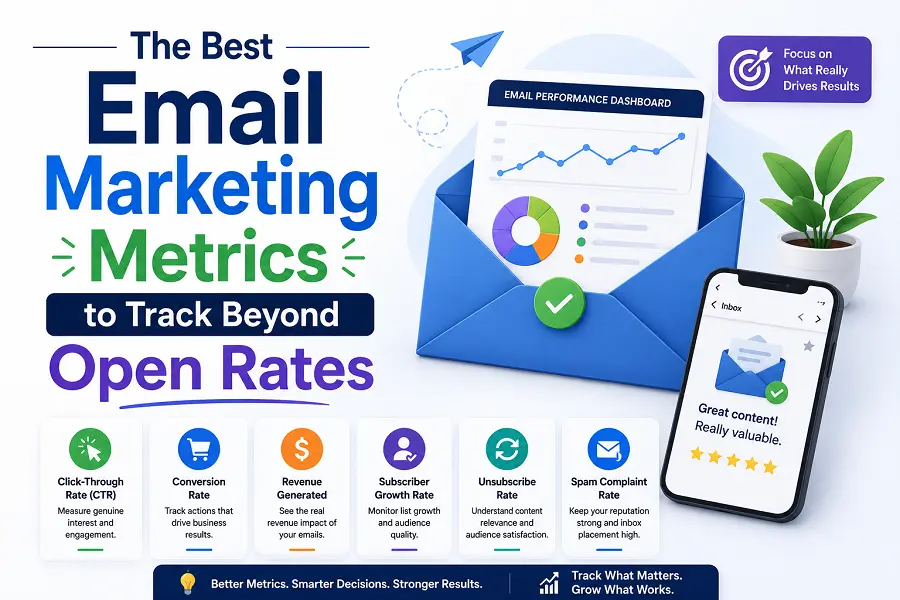
Apple’s Mail Privacy Protection and automated bot clicks have made email open rates unreliable. If you still rely on opens to judge campaign success, you are looking at distorted data. To understand how your subscribers actually behave, you must focus on metrics that measure genuine engagement and revenue.
Shifting your focus to deeper behavioral data reveals whether your emails spark action or simply sit in an inbox. The following metrics will help you optimize your strategy for real business growth.
Strategic Metrics for Genuine Engagement
Tracking how recipients interact with your content provides a clearer picture of campaign health than a simple open. High engagement signals to inbox providers that your audience values your messages, which directly protects your sender reputation.
-
Click-Through Rate (CTR): The percentage of total recipients who clicked a link inside your email. This measures your overall campaign strength, combining the effectiveness of your subject line, copy, and layout.
-
Click-to-Open Rate (CTOR): This compares unique clicks against unique opens. It isolates the performance of your email body content and call-to-action (CTA), showing if your copy delivered on the promise of your subject line.
-
Conversion Rate: The percentage of recipients who completed a specific goal, such as buying a product or downloading an ebook, after clicking a link. This links your email efforts directly to your business pipeline.
-
Forward and Share Rate: The frequency with which your subscribers pass your email to others or share it on social media. High share rates mean your audience finds your content valuable enough to advocate for your brand.
Bottom-Line Metrics That Drive Revenue
Email marketing should serve as a profit center. Evaluating your list based on financial impact helps justify marketing spend and shapes your budget allocation.
-
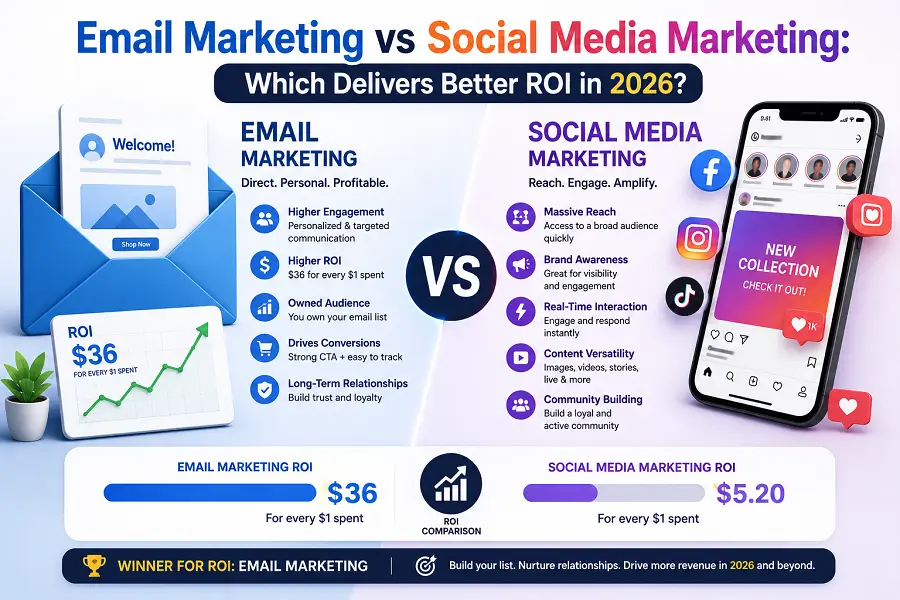
Return on Investment (ROI): Total revenue generated from a campaign divided by the total cost to run it. Tracking ROI proves the commercial value of email compared to paid advertising or social media channels.
-
Subscriber Lifetime Value (SLV): The total revenue a single subscriber generates throughout their entire relationship with your brand. This helps you determine exactly how much you can afford to spend on acquiring new subscribers.
-
Revenue per Email (RPE): Calculated by dividing the total revenue of a campaign by the number of delivered messages. This metric allows you to spot high-performing segments and find your most profitable automation workflows.
Deliverability and List Health Indicators
A beautiful email means nothing if it lands in the spam folder or gets sent to non-existent addresses. Monitoring technical health ensures your campaigns actually reach your audience.
Evaluating your bounce rate helps keep your list clean. Hard bounces represent permanent delivery failures, usually from invalid or fake email addresses, and you should remove them immediately. Soft bounces point to temporary issues, like a full inbox or a brief server glitch, which usually resolve on their own.
Spam complaint rates require equal attention. If more than one out of every one thousand recipients flags your message as spam, inbox providers may start blocking your emails entirely. Keeping an eye on your unsubscribe rate also alerts you to content fatigue or irrelevant messaging before your sender reputation suffers.
Conclusion
Relying solely on open rates offers a superficial view of your email marketing health. By prioritizing click patterns, conversions, financial returns, and deliverability indicators, you gain a realistic view of audience behavior. Use these deeper insights to refine your segmentation, improve your content, and build a highly profitable email program.
FAQs
Why are email open rates no longer reliable?
Privacy features like Apple’s Mail Privacy Protection automatically load email images in the background, which triggers a false open. Conversely, security filters can block tracking pixels, causing real opens to go uncounted.
What is a good Click-to-Open Rate (CTOR) to aim for?
While averages vary across industries, a healthy CTOR generally sits between 10% and 15%. A rate within this range indicates that your email content successfully engages the subscribers who opened it.
How do soft bounces differ from hard bounces?
Soft bounces happen due to temporary issues, such as a recipient’s full inbox or a temporary server error. Hard bounces are permanent delivery failures caused by invalid, deleted, or fake email addresses.
How can I lower my spam complaint rate?
Only send emails to people who explicitly opted in to your list. Additionally, make your unsubscribe link easy to find and ensure your content matches the expectations you set during sign-up.
How often should I clean my email subscriber list?
Cleaning your email list every three to six months keeps it healthy. Removing unengaged subscribers and invalid addresses protects your deliverability and lowers your email service provider costs.