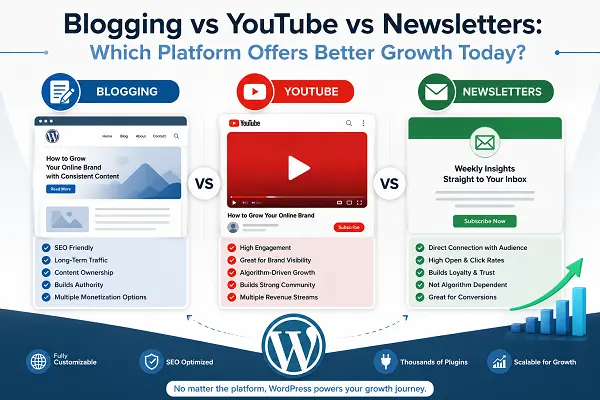
Choosing where to build a digital presence requires a clear understanding of how different platforms distribute content and capture audience attention. Content creators face three distinct paths: written web content, video broadcasting, and direct email communication. The platform that yields the fastest or most sustainable growth depends heavily on your monetization goals, content style, and technical resources.
The modern landscape separates discovery channels from relationship channels. Search engines and video algorithms help undiscovered creators find mass audiences through organic recommendations. Conversely, private feeds rely on deep intent and explicit opt-ins, prioritizing long-term retention over rapid initial exposure. Balancing these dynamics determines your overall trajectory.
Discovery vs Retention: The Mechanics of Audience Acquisition
To evaluate growth potential, you must distinguish between platforms that algorithmically push your content to strangers and those that require users to actively subscribe to hear from you. Websites and video channels act as discovery engines, pulling in cold traffic via search intent and behavioral recommendations. Email-based networks function as retention loops, locking in existing relationships.
The discovery mechanisms break down into distinct strategic advantages:
-
Search Intent Matching: Written articles capture high-intent users looking for specific answers, troubleshooting guides, or purchasing decisions.
-
Behavioral Recommendation Loops: Video algorithms track watch history and engagement patterns to suggest hyper-relevant media to passive browsers.
-
Subscriber Asset Ownership: Direct message feeds bypass algorithmic filters entirely, ensuring your message lands directly in a personal inbox.
-
Compounding Organic Traffic: Informational web assets can attract steady visits for months or years after publication without requiring continuous updates.
The Growth Blueprint: Speed, Scalability, and Resource Demands
Every medium demands a different tax on your time, budget, and specialized skills. High-production video yields massive viral potential and deep emotional connection but requires significant editing expertise and hardware investments. Written assets demand strong editorial discipline and keyword strategy but cost very little to launch and scale.
The path to scale varies by operational format:
-
Video Broadcasting: Offers the highest ceiling for rapid, explosive growth due to cross-platform recommendation features and visual engagement, though it carries a steep learning curve for production.
-
Written Web Publishing: Scales reliably through structured content clusters and topical authority, allowing small teams to compete with massive brands by targeting specific informational niches.
-
Direct Email Networks: Experiences slower initial discovery because it lacks an inherent public search directory, meaning growth must be fueled by external cross-promotion or referral incentives.
-
Hybrid Content Funnels: Maximizes overall reach by using video and written search assets as wide entry points to capture attention, then funneling that traffic into a private subscriber list.
Monetization Efficiency: Turning Traffic into Revenue
Growth means very little without an underlying system to sustain it financially. Video platforms distribute ad revenue sharing natively once baseline thresholds are met, making them highly lucrative for mass-appeal entertainment or lifestyle niches. However, text-based web systems excel at capturing transactional intent, generating premium affiliate conversions and high-value programmatic advertising revenue.
Direct email communication offers the highest financial yield per individual follower. Because subscribers actively chose to invite you into their private digital space, their purchasing intent is significantly higher. This ecosystem thrives on premium subscription tiers, direct brand sponsorships, and digital product launches, proving that a smaller, deeply dedicated audience can outperform a massive, superficial following.
Conclusion
No single platform wins the growth battle outright because each fulfills a different stage of the audience journey. Video channels deliver rapid visual exposure, written websites secure predictable search visibility, and private email lists solidify deep monetization and community ownership. The most effective contemporary strategy avoids choosing just one; instead, leverage search or video for initial discovery, and route that hard-earned attention into a subscriber list you own entirely.
FAQs
Which platform is the easiest for a beginner to start today?
Written web content requires the lowest barrier to entry. You do not need specialized camera gear, video editing software, or complex distribution tools—just a clear understanding of what your audience is searching for and the ability to answer it comprehensively.
Can I build a newsletter without having a blog or video channel first?
Yes, but growth will require aggressive networking, guest appearances, or paid acquisition. Because email networks lack built-in organic search recommendation engines, you must borrow audiences from other spaces to gain traction.
How long does it take to see meaningful traffic from a new website?
Organic web content typically requires four to nine months to establish topical authority and rank consistently. This timeline depends on keyword competition, content depth, and how effectively you satisfy user search intent.
Is the video market too saturated for new creators to find success?
While competition is fierce, recommendation algorithms constantly seek fresh perspectives to satisfy niche viewer habits. Success relies on hyper-focusing on specialized subtopics rather than attempting to cover broad, generalized categories.
What is the average conversion rate of email subscribers compared to casual web visitors?
Email subscribers regularly convert at a significantly higher rate for product sales and memberships. The explicit opt-in process establishes a baseline of trust that temporary search or video viewers rarely match on their first visit.