Choosing where to allocate your digital marketing budget requires a clear understanding of financial returns. As algorithms evolve and consumer habits shift, the debate between investing in email lists or growing a social media presence intensifies. Both channels offer distinct paths to connect with audiences, but their efficiency in turning attention into revenue diverges significantly.
Why Email Marketing Commands the Highest Financial Returns
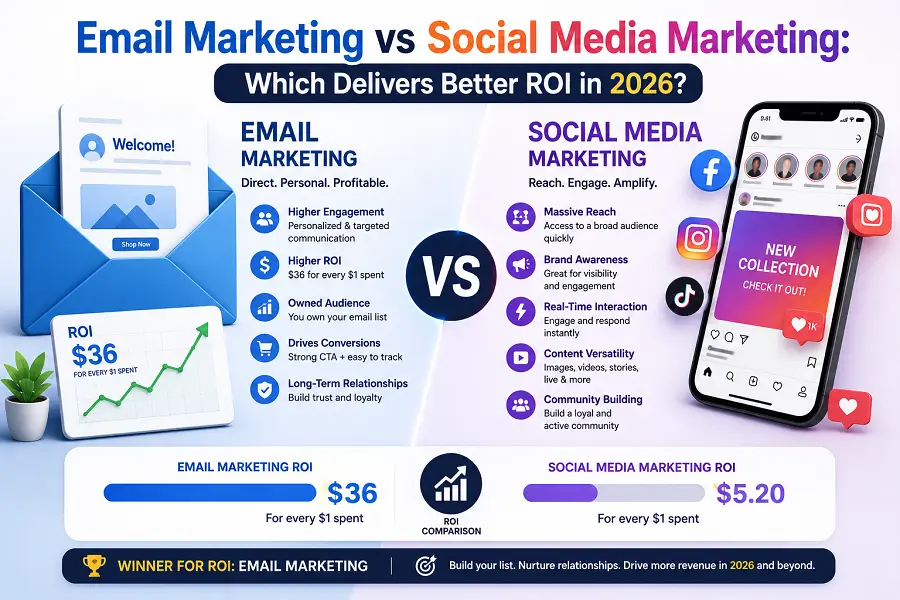
Direct ownership of your communication pipeline remains the primary reason email marketing yields unparalleled financial efficiency. When a business builds an subscriber list, it establishes a communication channel completely insulated from sudden policy shifts or layout modifications by external platforms. This stability translates into predictable performance and continuous customer touchpoints.
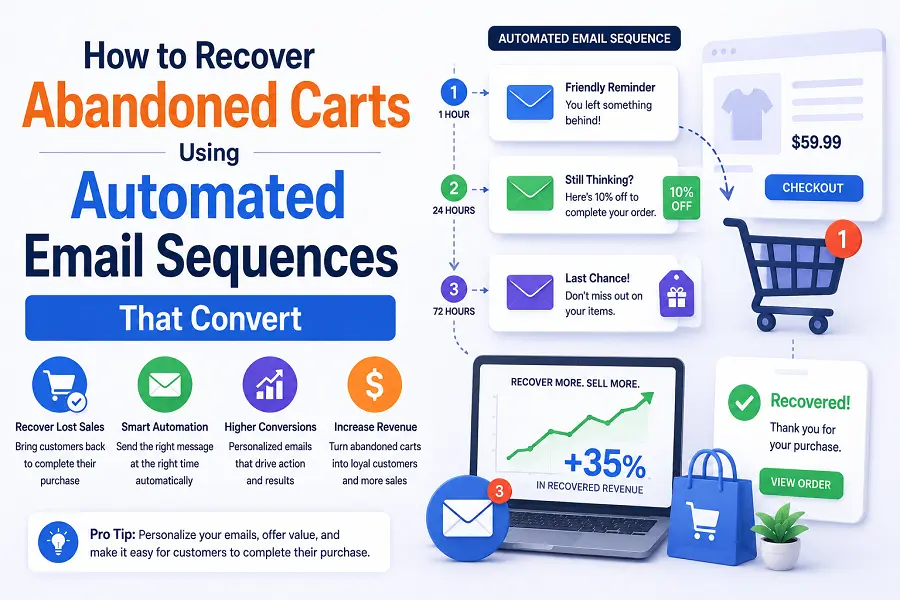
Advanced data utilization allows businesses to move away from generic broadcasts. Modern systems analyze behavioral triggers, such as previous items viewed or cart abandonment patterns, to send highly contextual messages. This precise relevance ensures that communication directly addresses consumer intent, making the recipient significantly more likely to complete a transaction.
-
Lower Cost per Interaction: Sending automated messages costs a fraction of a cent per recipient, keeping overhead remarkably low.
-
Higher Conversion Probability: Subscribers have actively requested your updates, representing a warm audience pre-disposed to your offers.
-
First-Party Data Protection: Privacy restrictions make external tracking unreliable, making your internal subscriber list your most valuable data asset.
-
Granular Analytical Tracking: Precise tracking of clicks, revenue per email, and exact transactional paths provides absolute clarity on spending efficiency.
The Role of Social Media in Broadening Top-of-Funnel Discovery
Social media serves a fundamentally different purpose in a modern commercial strategy, excelling at audience discovery and community building. Platforms are increasingly functioning as specialized search engines where younger demographics actively look for product demonstrations, peer reviews, and lifestyle alignment. This makes social channels indispensable for introducing a brand to individuals who are completely unaware of its existence.
Organic visibility has dropped across major networks, meaning that relying solely on unpaid posts rarely moves the financial needle. Success requires a sophisticated blend of paid amplification, creator collaborations, and highly engaging vertical videos. While these efforts build cultural relevance and trust, the multi-step journey from viewing a short video to visiting an external website inherently introduces friction into the purchasing cycle.
-
Unmatched Brand Exposure: Short-form vertical videos can rapidly spread across global audiences, generating millions of free impressions.
-
Interactive Community Engagement: Real-time comments, direct messages, and interactive polls allow immediate two-way communication that humanizes a business.
-
Hyper-Targeted Paid Campaigns: Paid advertising tools leverage complex interest and demographic data to put your offers in front of highly specific niche buyers.
-
Social Commerce Integrations: Native checkout options inside applications reduce buying friction by allowing purchases without exiting the platform.
Measuring the Conversion Efficiency: Inbox vs. Algorithm Feed
The direct comparison of performance metrics reveals a stark contrast in conversion efficiency. Organic social feeds typically show very low engagement rates, with only a small single-digit percentage of your total followers ever seeing an un-promoted post. In contrast, inbox delivery ensures your message sits directly in front of the user, resulting in substantially higher visibility and interaction rates.
Because social media users are primarily seeking entertainment or social connection, interrupting their experience with a sales pitch yields lower click-through rates. Email subscribers, however, view their inbox with a mindset of organization, productivity, and commerce. This intentionality ensures that transactional messages receive a much higher level of focus, driving massive performance advantages for email when measuring actual revenue generated per dollar spent.
Conclusion
When evaluating pure financial performance, email marketing remains the clear winner for bottom-line profitability due to list ownership and precise audience segmentation. However, optimizing your modern marketing strategy requires an interconnected approach rather than choosing one channel exclusively. The most profitable framework utilizes social media to capture attention and drive discovery, while systematically directing those individuals into an automated email system designed to foster long-term loyalty and repeat purchases.
FAQs
Why does email marketing consistently show higher conversion rates than social media?
Email marketing targets an audience that has explicitly chosen to receive your updates, meaning they already possess familiarity and trust. Additionally, the inbox environment is inherently transactional, making users more receptive to direct offers compared to the fast-paced, entertainment-focused nature of social media feeds.
Can a business achieve strong marketing results using only organic social media?
Relying entirely on organic social media is risky due to constant algorithm adjustments that limit unpaid post visibility. Without financial backing via paid ads or influencer partnerships, scaling a business solely through organic social reach is incredibly difficult.
How does list ownership affect long-term marketing expenses?
Owning your list means you do not have to pay a third party to communicate with your existing audience. On social platforms, you must continually spend money on advertising to ensure your followers see your content, making customer retention significantly more expensive over time.
What metrics should I focus on to measure true email marketing success?
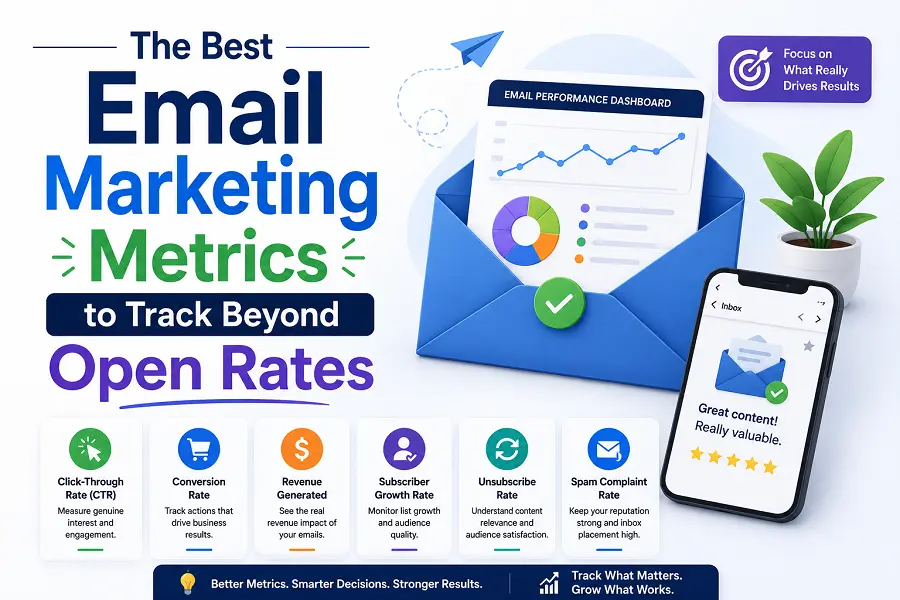
Instead of focusing purely on open rates, which can be obscured by privacy filters, prioritize click-through rates, revenue generated per subscriber, and overall conversion numbers. These metrics give a factual picture of how your campaigns influence actual revenue.
How can small businesses integrate both channels without a massive budget?
The most cost-effective method is using social media to share free, helpful tips or exclusive incentives that encourage viewers to join your newsletter. Once those followers transition onto your email list, use simple automated welcome sequences to educate them and present your core offerings automatically.