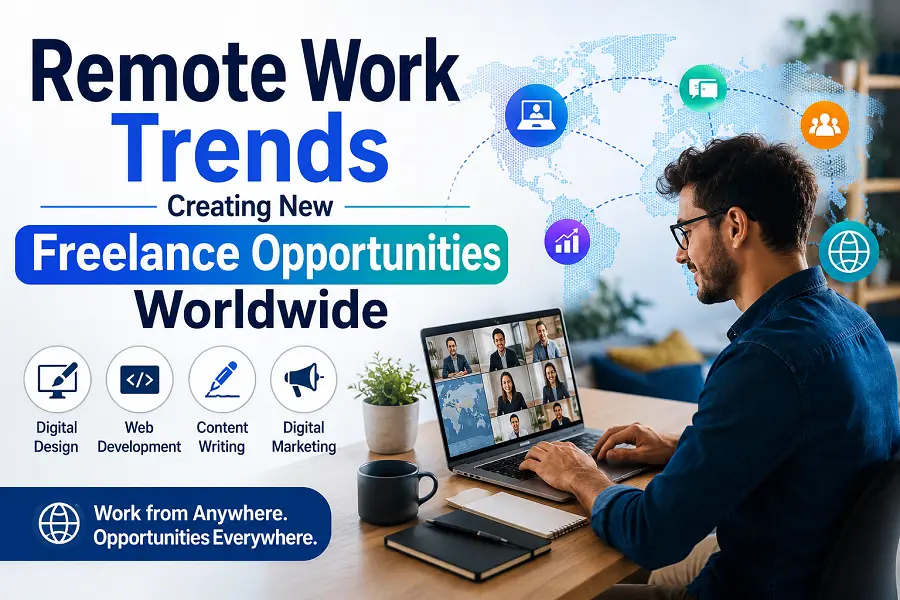
The global employment landscape has shifted permanently away from centralized office mandates. Companies no longer view distributed teams as a temporary patch, but rather as a core strategy for operational agility. This institutional acceptance of flexible working models has unlocked a massive, decentralized economy. Organizations are rapidly dismantling traditional full-time roles, replacing them with agile freelance contracts to source niche expertise globally without geographical constraints.
The Rise of the Fractional Executive and Specialized Consultant
As enterprises lean into leaner organizational structures, the demand for part-time, high-impact leadership has surged. Companies require elite strategic guidance but often lack the capital or need for a permanent, full-time C-suite executive.
-
Fractional Leadership: Independent experts now step into part-time Chief Marketing Officer (CMO), Chief Technology Officer (CTO), or Chief Financial Officer (CFO) roles for mid-sized firms.
-
Agile Project Management: Distributed corporate structures require independent Scrum masters and agile coaches to align cross-border product teams.
-
Corporate Compliance and Data Privacy: Localized data regulations compel international businesses to hire contract legal and data security specialists on a project basis.
-
AI Integration Consulting: Traditional businesses seek independent automation developers to audit existing workflows and deploy custom artificial intelligence tools.
-
Cross-Border Talent Operations: Organizations hire independent global HR consultants to navigate the complexities of hiring, onboarding, and managing international workforces.
Decentralized Infrastructure and Digital Workspace Security
The transition to permanent remote structures requires robust digital environments that mirror physical offices. This transformation has introduced highly specific technical bottlenecks that companies are outsourcing to independent specialists.
-
Cloud Migration Architecture: Organizations hire freelance cloud engineers to migrate legacy corporate databases to secure, scalable distributed networks.
-
Remote Cybersecurity Auditing: Independent penetration testers evaluate home-office networks, virtual private networks (VPNs), and endpoints to prevent corporate data breaches.
-
Asynchronous Communication Design: Solopreneurs specializing in workflow optimization structure company knowledge bases to streamline documentation across different time zones.
-
Virtual Event Production: Professional remote coordinators design, technical-direct, and execute large-scale digital conferences and corporate retreats.
-
SaaS Stack Integration: Independent software developers build custom integrations between disparate communication, project management, and billing tools used by remote teams.
The Hyper-Specialization of the Creative and Content Gig Economy
Generic content creation is no longer sufficient to capture audience attention in crowded digital spaces. As brands compete for visibility across global markets, they are bypassing traditional agency retainers in favor of direct relationships with specialized freelance creators.
Corporate budgets are shifting toward interactive multimedia, technical documentation, and hyper-localized brand messaging. Freelancers who understand the nuances of specific industries, such as financial technology or biotechnology, can command premium pricing. This trend values deep subject matter expertise over generalized writing or design skills, allowing independent professionals to position themselves as indispensable growth partners rather than transactional service vendors.
Conclusion
The evolution of remote work has fundamentally changed how corporations view talent acquisition. By breaking down geographic barriers and shifting toward project-based operational structures, companies have paved a clear path for independent professionals. Freelancers who align their skills with corporate security, cloud infrastructure, fractional leadership, and specialized content creation are uniquely positioned to build highly resilient, global businesses.
Frequently Asked Questions
What is a fractional executive in the freelance market?
A fractional executive is an experienced professional who provides strategic leadership to multiple companies simultaneously on a part-time or contract basis, offering high-level expertise without the cost of a full-time hire.
Why are remote companies preferring freelancers over full-time staff?
Freelancers offer corporations maximum flexibility, allowing teams to scale up or down based on current project demands while avoiding the overhead costs associated with full-time employment benefits and office space.
Which technical freelance skills are currently seeing the fastest growth?
Skills related to cloud computing architecture, cybersecurity auditing, AI integration, and custom enterprise software development are experiencing massive demand as corporate infrastructures become increasingly decentralized.
How do time zone differences affect global freelance opportunities?
Time zone gaps have driven the adoption of asynchronous communication. Freelancers who can document their workflows clearly and operate independently without constant real-time supervision are highly valued by global teams.
Can creative freelancers compete against automated tools?
Yes. While basic tasks are shifting, high-earning creative freelancers succeed by focusing on hyper-specialized niches, strategic content design, and technical industry knowledge that software cannot replicate.