
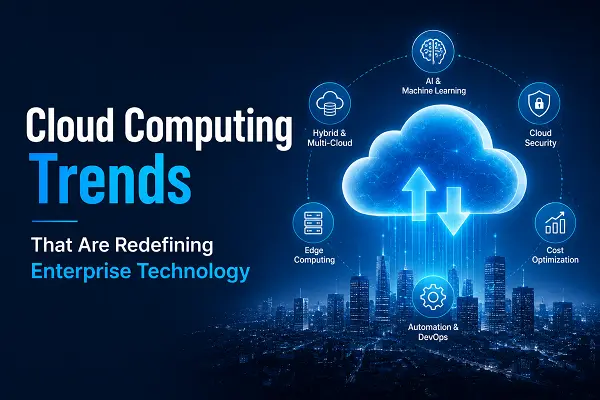
The structural foundation of enterprise IT has advanced far beyond the initial migration phase of simply moving local data to off-site servers. In earlier technological deployment waves, organizations evaluated cloud adoption under a binary framework, treating the public cloud as a standard, centralized destination for corporate storage. This straightforward approach solved basic storage capacity limits but overlooked deeper systemic friction points, such as heavy network delays and unpredictable data transit surcharges.
Modern enterprise technology is shaped by an entirely new architecture known as Cloud 3.0. This framework views cloud infrastructure not as a fixed physical location, but as a flexible, distributed operating model. Instead of stretching traditional data centers to handle complex workloads, companies are intentionally designing adaptive ecosystems. These systems prioritize data placement, high-performance computing flexibility, and immediate localized execution to support a highly automated corporate economy.
Critical Infrastructure Movements Overhauling Enterprise Operations
Achieving true digital agility requires a comprehensive shift toward decentralized environments that place data processing power precisely where it delivers the highest operational yield.
-
The Maturation of Cloud 3.0 All-Flavors Deployment: Organizations are avoiding total reliance on single public providers by assembling a custom mosaic of private nodes, regional networks, and sovereign cloud systems.
-
Decentralized Edge Inference Infrastructure: To eliminate the latency caused by sending data back and forth to distant core servers, companies are processing intricate reasoning algorithms directly on localized edge devices.
-
The Rise of AI Agent Mesh Systems: Modern enterprise setups are integrating intermediate software meshes designed specifically to route communications, enforce security policies, and manage interactions between different autonomous digital workers.
-
The Proliferation of Sovereign Clouds and Geopatriation: Strict data localization laws and shifting international compliance mandates are forcing companies to relocate critical virtual workloads into localized regional cloud environments.
Operational Milestones for Building a Resilient Corporate Architecture
Transitioning to a modern, value-driven computing ecosystem requires a systematic implementation framework that balances continuous software innovation with aggressive cost oversight.
-
Embed FinOps as a Standard Financial Discipline: Organizations must bridge the gap between finance and engineering teams by deploying automated tracking software to eliminate unallocated resource waste and prevent surprise billing overages.
-
Move the Computing Layer Directly to the Data Location: To counter the high costs and physical delays of moving massive data sets, technical teams should deploy portable application containers directly onto existing local databases.
-
Harness Serverless Architecture for Variable Workloads: Developers maximize runtime efficiency by deploying code via event-driven execution models, completely removing the administrative burden of server upkeep while ensuring true pay-as-you-go billing.
-
Enforce Strict Application-Level Resiliency Standards: Infrastructure teams must shift focus from relying solely on cloud provider uptime guarantees to engineering self-healing applications that recover instantly from localized network dropouts.
Aligning Computing Strategy With Strategic Business Outcomes
The ultimate value of modern cloud infrastructure lies in its ability to transform IT departments from standard cost centers into active engines of commercial growth. When software systems transition into modular, self-assembling frameworks, the traditional technical barriers to entering new markets completely disappear. Businesses can spin up regional operations, test experimental products, and process vast analytical pipelines in hours rather than months.
This structural freedom allows enterprise leaders to treat computing power as an elastic, strategic variable that scales seamlessly alongside real-time consumer demand. By building an infrastructure optimized for processing speed, data sovereignty, and cost transparency, corporations protect themselves against market disruptions. The competitive advantage no longer belongs to the business with the largest raw database, but to the organization that orchestrates its cloud environments with the highest strategic precision.
Conclusion
The evolution of cloud computing is permanently rewriting the rules of corporate execution by replacing rigid, centralized models with highly adaptive ecosystems. By systematically embracing multi-cloud flexibility, localized edge inference, and tight financial accountability, forward-thinking enterprises establish the durable foundations required to lead a highly automated global marketplace.
Frequently Asked Questions
What exactly distinguishes Cloud 3.0 from previous cloud computing generations?
Cloud 3.0 shifts away from viewing the cloud as a simple centralized storage destination, operating instead as a highly distributed, active processing environment that blends public, private, edge, and sovereign systems into a single operational layer.
Why has the cloud FinOps framework become an absolute necessity for modern corporations?
With infrastructure scaling automatically, companies frequently face severe budget overruns due to idle resources and hidden data movement fees; FinOps establishes data-driven financial ownership to eliminate unallocated cloud waste.
How does an AI agent mesh function within a distributed cloud ecosystem?
An AI agent mesh acts as a centralized governance layer that monitors identity, enforces security protocols, blocks unauthorized data sharing, and minimizes operational costs across a network of active digital workers.
What is driving the sudden enterprise movement toward geopatriation and sovereign clouds?
This movement is primarily driven by strict regional data privacy mandates and geopolitical requirements that force businesses to store and process sensitive consumer data within explicit geographic borders.
How does edge inference directly improve the performance of real-time applications?
Edge inference processes complex data algorithms directly on local hardware situated near the data source, completely bypassing the network transmission delays associated with sending information to distant data centers.
