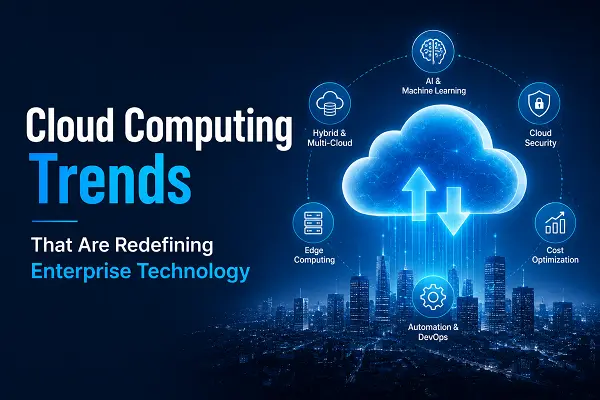
The corporate landscape in 2026 has officially transitioned from speculative technological experimentation into a period of strict, impact-driven implementation. In previous years, organizations frequently allocated substantial capital toward digital proof-of-concept projects purely to signal innovation to shareholders. These pilot programs often operated in isolation, serving as novelty tools rather than core drivers of enterprise value.
This year, the benchmark for technological adoption is strictly tied to measurable operational growth, structural resilience, and scalable efficiency. As global market complexities intensify, modern enterprises are restructuring their foundational architectures around technologies that actively self-optimize. The focus has moved completely away from merely collecting digital tools to orchestrating integrated, intelligent ecosystems that autonomously uncover new revenue streams and shield operations from market volatility.
High-Impact Technological Pillars Transforming Modern Commerce
Achieving sustained commercial acceleration this year requires a deep commitment to advanced computing paradigms that bridge the gap between digital intelligence and physical execution.
-
Autonomous Multi-Agent Collaboration Networks: Modern software setups now deploy arrays of specialized digital agents that independently communicate, delegate sub-tasks, and execute complex cross-departmental workflows without human intervention.
-
Industrial Digital Twins and Real-Time Forecasting: Virtual replications of entire factories, supply chains, and retail environments utilize continuous sensor data to run predictive simulations, allowing businesses to optimize workflows risk-free.
-
The Rise of Ubiquitous Physical Artificial Intelligence: Machine intelligence has moved past flat screens and software interfaces into advanced robotics, warehouse fulfillment systems, and autonomous delivery vehicles that adapt dynamically to real-world environments.
-
Integrated Multi-Layer AI Security Frameworks: As automated systems assume greater structural control, businesses are implementing consolidated defense platforms that actively screen prompts, protect proprietary data models, and block injection threats in real time.
Sequential Steps for Scaling Technology to Drive Market Advantages
Successfully leveraging these advanced innovations requires an analytical framework designed to transform raw technological capabilities into repeatable commercial success.
-
Transition to an Outcome-Based Infrastructure Model: Corporate leaders must abandon standard software licensing habits and pivot toward tech stacks where spending is tied directly to clear operational outcomes and transaction efficiencies.
-
Architect a Unified Hybrid Compute Strategy: High-performance scaling requires migrating away from purely public cloud networks toward a custom mix of low-latency edge computing, private sovereign databases, and elastic cloud nodes.
-
Redesign End-to-End Processes Before Automating: To avoid embedding existing operational inefficiencies into new software, management must thoroughly restructure workflow steps prior to deploying autonomous agent networks.
-
Establish Comprehensive Guardrails and Localized Governance: Organizations must install robust internal oversight frameworks, complete with continuous auditing tools and human-in-the-loop validation checkpoints, to ensure complete data security.
Optimizing the Intersection of Human Strategy and Automated Systems
The rapid maturation of self-assembling software and intent-driven development environments does not minimize the value of human capital; instead, it redefines the entire nature of professional expertise. When corporate software begins to independently write its own code, manage its own updates, and heal its own errors, the traditional competitive advantage of manual execution disappears. Commercial success now belongs entirely to organizations that train their workforces to excel at strategic orchestration.
Human teams are shifting away from tedious data entry and mechanical reporting to become essential conductors of digital systems. This structural shift allows businesses to scale their output exponentially without causing employee burnout. The enterprises experiencing the most aggressive financial growth in 2026 are those that have successfully built a collaborative symmetry, leveraging machines for relentless tactical execution while retaining human judgment for high-stakes ethical and directional decisions.
Conclusion
Business growth in 2026 is defined by the seamless transition from passive digital tools to adaptive, self-sustaining tech ecosystems. By systematically implementing autonomous multi-agent networks, high-fidelity digital twins, and robust hybrid compute strategies, modern enterprises build the agility required to dominate an increasingly unpredictable global marketplace.
Frequently Asked Questions
Why are multi-agent systems displacing single-prompt assistants in the workplace?
Single-prompt assistants remain entirely reactive and require step-by-step human guidance, whereas multi-agent networks can independently break down abstract corporate goals into a logical sequence of actions, utilize external APIs, and collaborate across separate departments to complete multi-day projects.
How do industrial digital twins directly reduce corporate overhead costs?
Digital twins create real-time virtual mirrors of physical assets, allowing logistics and manufacturing companies to test layout changes, predict machinery maintenance needs before a breakdown occurs, and run complex situational testing without halting active production lines.
What is pushing modern enterprises toward a hybrid and sovereign cloud strategy?
The immediate need to fine-tune advanced models on highly sensitive, proprietary corporate data—combined with the necessity for low-latency processing and strict compliance with regional data laws—makes relying entirely on standard public cloud setups impractical.
How does intent-driven software development change the role of corporate IT teams?
Instead of manually writing lines of code, IT professionals now articulate desired business outcomes and system parameters to automated architectures, shifting the primary responsibilities of tech teams toward system governance, security integration, and strategic orchestration.
Why do many autonomous software automation projects fail during production scaling?
Most projects stumble because organizations make the mistake of automating broken, outdated processes; long-term technological success requires completely re-engineering operational workflows from scratch before handing execution over to autonomous software.
For an explicit visual breakdown of how these specific systems are being deployed to reshape enterprise operations, take a look at this detailed analysis on the Top 5 Enterprise Tech Trends. This resource clarifies how advanced digital twins and autonomous agent frameworks are consolidating to drive corporate modernization.