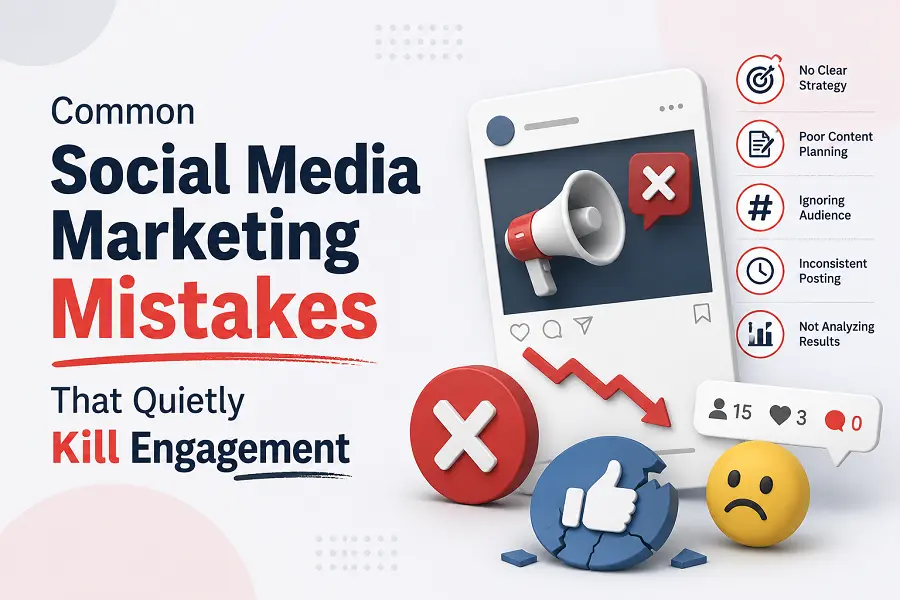
Many brands watch their social media metrics decline without understanding why. They publish consistently, use sharp visuals, and follow trending formats, yet their comment sections remain empty.
When social media performance stalls, the culprit is rarely a sudden algorithm shift. Instead, minor, unnoticeable strategic errors quietly signal to platforms that your content lacks value. Identifying these hidden friction points is the first step toward rebuilding an active, loyal online community.
1. Treating Every Platform Like the Same Stage
A frequent misstep is cross-posting identical text and media across Instagram, LinkedIn, and TikTok simultaneously. While this saves time, it ignores the distinct psychology of each user base.
-
Instagram relies heavily on visual storytelling and immediate aesthetic appeal.
-
LinkedIn demands professional context, industry insights, and career-focused discussions.
-
TikTok thrives on unpolished, high-energy authenticity and rapid pacing.
When you paste a paragraph filled with hashtags from Instagram onto LinkedIn, it feels out of place. Audiences recognize automated, low-effort distribution instantly. They scroll past because the formatting violates the unwritten cultural norms of their chosen app. To fix this, customize your core message to match the native tone and presentation style of each specific network.
2. Defaulting to Megaphone Marketing
Social media is designed for two-way conversations, but many business pages operate like broadcast television. Broadcasting endless promotional announcements, product features, and sales pitches turns active communities into passive onlookers.
If your feed consists entirely of self-serving content, followers quickly develop ad blindness. Algorithms prioritize meaningful interactions, such as lengthy comments and repeated shares. When you fail to ask open-ended questions, respond to user feedback, or spark debates, your engagement rate drops. Shift your content mix from talking at your audience to creating opportunities to talk with them.
3. Chasing Vanity Metrics Over Genuine Connection
Buying followers, participating in engagement pods, or optimizing solely for raw view counts damages your account’s long-term health. A large follower count looks impressive initially, but it backfires if those accounts never interact with your posts.
Platforms calculate engagement percentages based on how many people see a post versus how many take action. If you have 50,000 followers but only receive 10 likes per post, the algorithm assumes your content is poor quality. It then reduces your organic reach even further. Prioritize a smaller, highly attentive audience that saves, shares, and discusses your updates over a massive, silent follower list.
Conclusion
Reversing downward trends in social media engagement requires moving away from automated shortcuts and self-centered broadcasting. By treating each platform as a unique ecosystem and focusing on genuine human interaction, you realign your strategy with what modern algorithms reward. Sustainable growth comes from delivering tailored value to real people, one post at a time.
Frequently Asked Questions
Why is my social media reach dropping even though I post daily?
Posting too frequently can cause audience fatigue and dilute your content’s quality. If your updates don’t generate immediate likes or comments, platforms stop showing them to your followers. Focus on high-value posts over high volume.
How does editing a post after publishing affect performance?
Modifying a caption or tag right after publishing can reset the platform’s initial evaluation of your post. It is safer to double-check all copy and links beforehand to maximize early momentum.
Should I reply to every comment on my business page?
Yes. Prompt replies show your audience that you value their time and signal to platform algorithms that your thread is an active, conversational hotspot worth promoting.
Is using automated publishing tools harmful to reach?
No, scheduling tools do not inherently hurt your reach. However, logging off entirely after scheduling prevents you from interacting with early viewers, which indirectly limits your visibility.
How long does it take to fix tanked engagement rates?
Rebuilding account health generally takes a few weeks of consistent, high-quality interactions. Clean up your strategy, stop low-value posting habits, and let the algorithm learn to trust your content again.

