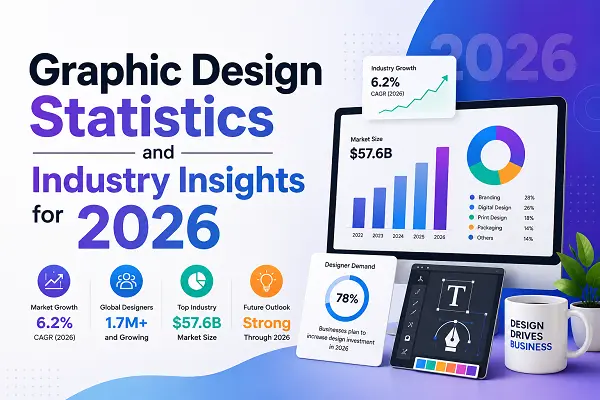
The graphic design industry in 2026 is undergoing a profound transformation. As the market valuation approaches $59.29 billion, the profession is moving away from purely manual execution toward a hybrid model of human creativity supported by autonomous intelligence. This shift has redefined how designers work, how agencies price their services, and how businesses perceive the value of visual communication.
The State of the Graphic Design Market
The industry is currently defined by high demand for digital content and an increasing need for brand authenticity. As businesses compete for attention in a saturated digital landscape, visual communication has become a non-negotiable component of business strategy.
-
Market Growth and Scale: The global graphic design market is projected to grow at a compound annual growth rate of 7.60% through 2031. This expansion is fueled by the explosion of digital and omnichannel marketing, where visual assets are the primary drivers of engagement.
-
The Freelance Landscape: Approximately 90% of graphic designers now operate as freelancers or independent contractors. This shift reflects the industry’s move toward flexible, project-based creative support rather than traditional, static in-house roles.
-
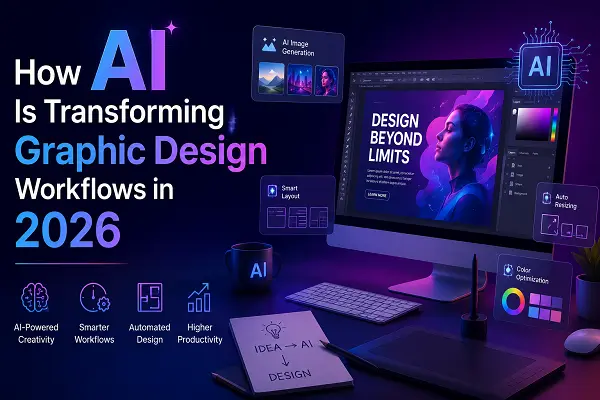
AI Integration vs. Replacement: While 88% of businesses report using AI design tools, only 18% claim these tools have reduced their need for professional designers. Instead, companies are reallocating human talent from repetitive production to high-level strategic problem-solving.
-
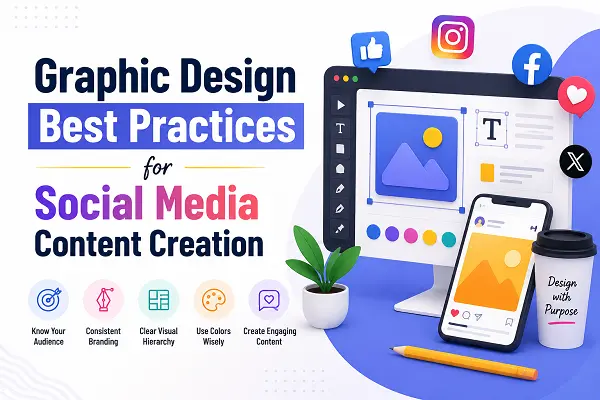
Performance-Driven Demand: Visual design is now inextricably linked to marketing metrics. Over 30% of businesses cite design as the primary factor influencing advertising performance, with social media graphics emerging as the most rapidly growing service request.
Strategic Shifts in Workflow and Delivery
Professional workflows have adapted to account for the speed and scale made possible by intelligent automation. Designers and agencies are refining their processes to maintain quality while increasing output.
-
Automated Production: Routine tasks such as image resizing, background removal, and asset versioning are increasingly handled by autonomous systems, saving designers an average of 10 hours per week.
-
Focus on “Human-Centered” Design: In reaction to the perceived uniformity of AI-generated content, there is a strong trend toward “tactile rebellion.” Designers are intentionally incorporating organic textures, hand-drawn elements, and purposeful imperfections to signal authenticity and human craftsmanship.
-
Outcome-Based Value: Pricing is shifting from hourly billing toward models that prioritize project outcomes. Designers who can link their work directly to conversion metrics or engagement growth are commanding premium rates.
-
Platform Consolidation: Brands are moving away from fragmented toolsets toward unified design platforms that allow for real-time collaboration, integrated asset management, and seamless hand-off between creative and technical teams.
The Evolving Skill Set for Designers
To remain competitive in 2026, designers must balance traditional artistic fundamentals with high-level technical literacy. The ability to “direct” AI models is as vital as the ability to draw or compose a layout.
The modern designer is a curator, editor, and creative director. Success is no longer measured by the speed of execution, which is now a commodity, but by the ability to solve complex business problems through compelling visual storytelling. As technical barriers to entry lower, the premium on original concept development and deep brand empathy continues to rise.
Conclusion
The graphic design industry of 2026 is robust, vibrant, and more integrated into the core of business operations than ever before. While technology has automated the mechanics of design, it has simultaneously elevated the value of human judgment and creative strategy. Designers who embrace this partnership—leveraging AI for efficiency while anchoring their work in unique human insight—are not only surviving the technological transition but thriving within it.
Frequently Asked Questions
Has AI reduced the demand for graphic designers?
No. While AI has automated repetitive tasks, it has not replaced the need for human strategy, brand storytelling, or creative direction. Demand for designers remains high, particularly for those who can integrate AI into a broader creative workflow.
What is the most important skill for a designer in 2026?
The most valuable skill is “creative judgment.” With AI capable of generating vast amounts of content, the ability to curate, refine, and strategically apply designs to meet specific business objectives is what distinguishes top-tier professionals.
Are businesses spending more or less on design?
Design budgets are largely expanding or remaining stable. Businesses are prioritizing visual quality as a way to stand out in a noisy digital environment, treating design as a growth-driving investment rather than a cost.
What is the “tactile rebellion” trend?
It is a shift toward “imperfect” design—using hand-drawn elements, textures, and organic styles to counter the polished, uniform output often associated with AI. It is used to signal authenticity and build trust with audiences.
How is AI changing design pricing?
Agencies and freelancers are moving toward outcome-based pricing. As efficiency increases, the value proposition shifts from “hours worked” to “business impact delivered,” such as increased engagement or higher conversion rates.