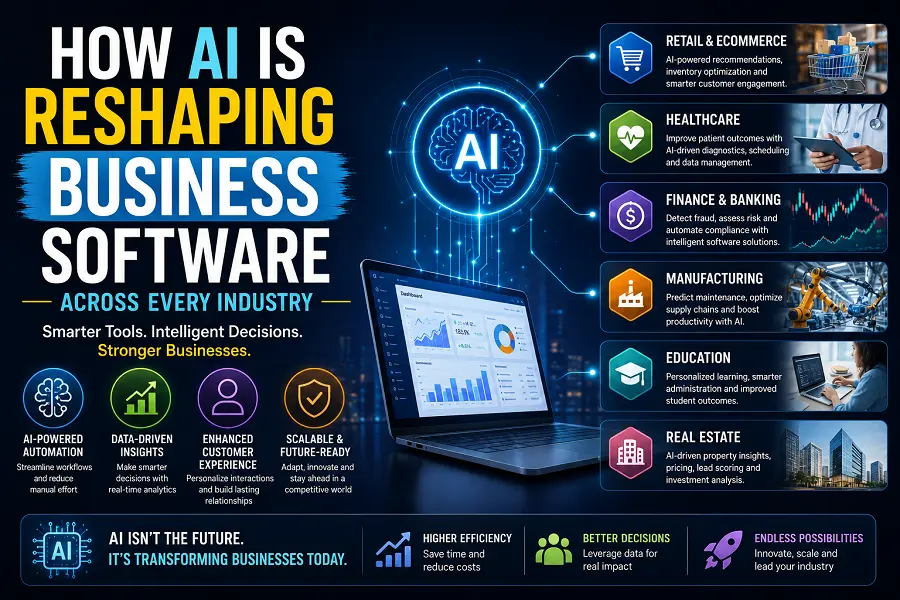
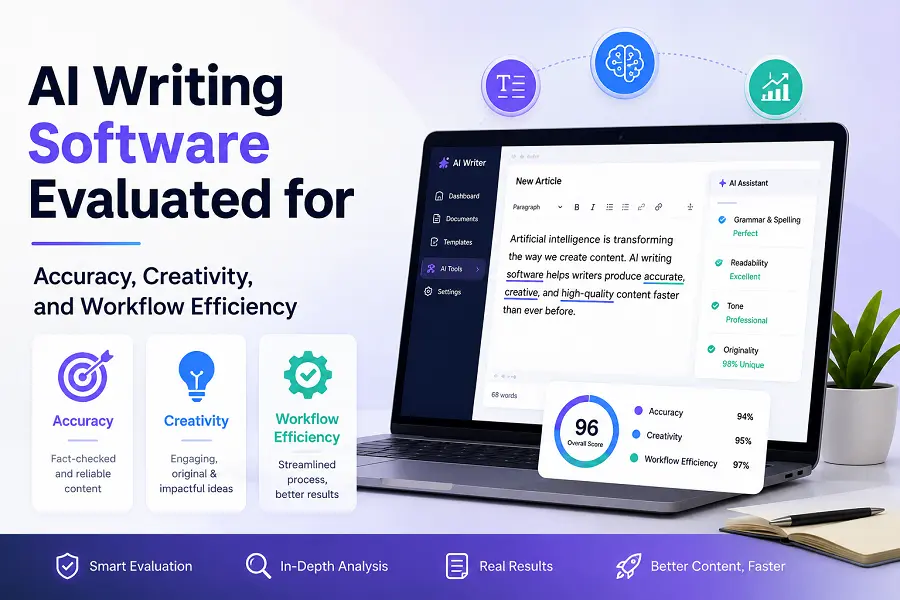
The integration of artificial intelligence into corporate editorial pipelines has progressed from an experimental trend to an operational baseline. Modern content development teams no longer question whether automated text generators possess a role in production. Instead, the focus has shifted entirely to technical quality metrics: how precisely an engine maintains factual integrity, how effectively it breaks away from repetitive phrases, and how smoothly it links into complex content management systems.
Relying on raw machine output without calculating these behavioral variables introduces hidden risks to an organization’s digital footprint. Search algorithms are increasingly built to isolate and filter lookalike text that fails to offer original insights or direct human utility. Maximizing return on investment requires evaluating modern writing platforms across three distinct pillars of modern text production.
Factual Accuracy and Information Integrity Benchmarks
The primary risk of utilizing automated language models centers around computational fabrication, commonly known as hallucination. Because text generators predict the next most likely syllable based on historical probabilities, they inherently lack an internal concept of absolute objective truth.
-
Algorithmic Verification Anchors: Top-tier engines link directly into real-time digital lookup indexes, actively cross-checking generated assertions against verified web documents before outputting lines.
-
Logical Premise Consistency: High-performing architectures maintain structural focus across long text spans, avoiding self-contradiction between introductory premises and closing summaries.
-
Data Extraction Precision: Advanced systems isolate key statistics from extensive raw source materials, including technical layout specifications and deep financial statements, without misinterpreting decimal variables.
-
Compliance Variable Identification: Superior software flags its own ambiguous statements or missing citations, alerting human editors to areas that require immediate source confirmation.
Deconstructing Narrative Creativity and Stylistic Variation
When text feels overly structured and predictable, human engagement indicators drop instantly. True creative capability in software is not defined by complex dictionary choices, but by how cleanly an engine mirrors the erratic natural pacing of human thought.
-
Sentence Length Burstiness: Premium writing engines generate a varied textual rhythm, positioning brief, declarative assertions right alongside complex, multi-clause explanations.
-
Entity-Driven Metaphor Generation: Advanced language tools move past tired clichés by drawing parallels between abstract technical concepts and tangible real-world physical scenarios.
-
Flexible Dialect and Formality Calibration: High-tier systems adjust their prose output smoothly across a wide gradient, moving from dense peer-reviewed academic framing to approachable, conversational industry commentary.
-
Original Structural Blueprinting: Rather than replicating standard top-ranking search engine structures, elite platforms analyze user intent to build distinct section hierarchies that offer higher overall informational value.
Optimizing Production Efficiency and Collaborative Systems
The ultimate measure of an enterprise writing assistant is its practical impact on day-to-day workflow velocity. If a software platform demands hours of structural human prompt adjusting and heavy paragraph rewriting, it ceases to act as an organizational efficiency asset.
Modern publishing teams achieve optimal scalability by deploying unified content workspaces that connect analytical discovery directly into the text editor canvas. In this balanced configuration, machine engines rapidly assemble comprehensive background briefs, extract entity keyword maps, and construct initial layout drafts. This frees up human subject matter experts to dedicate their specialized energy to verifying claims, inserting unique corporate case study data, and weaving in custom brand voice markers. This unified human-in-the-loop setup significantly lowers draft turnaround times while producing authoritative text built to survive stringent quality evaluations.
Conclusion
Evaluating modern AI writing software reveals that while large language models deliver unmatched structural efficiency, their standalone accuracy and creative depth require human guidance. The platforms that provide the highest utility are those treated as advanced drafting engines, depending on human editors to transform generic machine text into trusted, authoritative resources.
Frequently Asked Questions
Which AI writing engine produces the most natural, human-sounding text tone?
Anthropic’s Claude models lead the industry in generating human-like tone, demonstrating superior handling of fluid sentence variations, varied vocabulary choices, and contextual nuance compared to competitive platforms.
Can automated writing software fully match human creative storytelling?
No. While software can rapidly brainstorm unique plot options or rephrase style layouts, it lacks lived experiences and emotional intuition, meaning it cannot manufacture genuine personal perspectives or original thought leadership.
How does using AI text generators affect a website’s Google visibility?
Google ranks helpful, high-quality, user-focused content regardless of how it was created. However, publishing unedited machine drafts that lack unique insights frequently results in severe visibility loss during core algorithm updates.
What is the most effective method for reducing AI data hallucinations?
The most reliable method is to provide the assistant with explicit background source documentation and instruct the model to draw its answers solely from those provided parameters while forbidding it from guessing.
Should marketing teams utilize specialized template software or general AI models?
General models like Claude or ChatGPT offer higher long-term flexibility and cost-efficiency, whereas specialized template tools are beneficial for large corporate teams that require rigid, automated brand voice boundaries across multiple users.