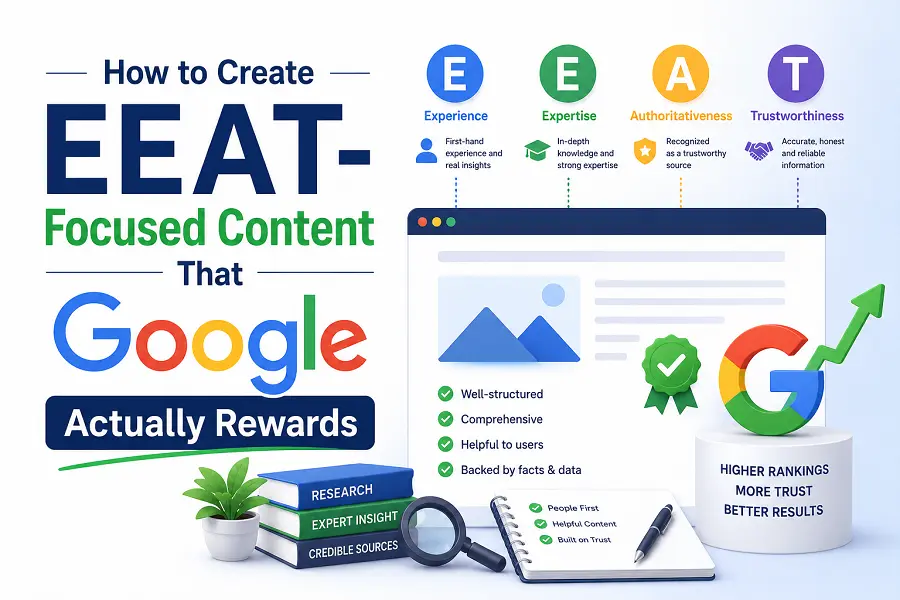
Google uses automated systems to identify helpful, reliable information. At the heart of this evaluation sits E-E-A-T: Experience, Expertise, Authoritativeness, and Trustworthiness. While not a direct ranking signal, these factors shape how search engines evaluate content quality. Creating pages that fulfill these criteria requires shifting away from old SEO keywords-stuffing tactics and focusing entirely on real-world value.
Unpacking the Four Pillars of Modern Quality
Building digital trust requires satisfying four distinct layers of credibility. Each pillar plays a specific role in proving to search systems that your page deserves high visibility.
-
Experience: This demonstrates first-hand involvement with the topic. It includes original photography, unique case studies, and personal testing.
-
Expertise: This reflects the formal knowledge, credentials, or deep industry understanding of the creator.
-
Authoritativeness: This represents your reputation in your niche. It builds when other recognized professionals cite your work as a definitive reference.
-
Trustworthiness: The central core of the entire framework. It combines security, factual accuracy, transparent sourcing, and clear ownership details.
Practical Blueprint for Demonstrating Real-World Authority
Publishing high-quality material requires a systematic approach to research and formatting. Creators must document their processes openly to stand out in an era saturated with automated text.
-
Introduce First-Person Insights: Share specific outcomes from your own experiments or professional projects. Use phrases that highlight personal trial and error rather than summarizing existing web pages.
-
Display Clear Author Credentials: Every piece of informational content needs a visible author bio. Include specific degrees, years of industry experience, or past professional achievements to validate why the writer is qualified to speak on the topic.
-
Prioritize Fact Checking: Verify every data point, statistic, and technical claim before hitting publish. Correct mistakes quickly and maintain an update log if information changes over time.
-
Align with Search Intent: Design your layout to give immediate answers. If a user searches for a specific fix, place that solution near the top of the page to satisfy the algorithmic preference for rapid problem-solving.
Technical Elements That Solidify Page Trust
Algorithms look beyond the written words to assess the underlying security and transparency of a website. A beautifully written article will underperform if the platform hosting it feels anonymous or unsecure.
Ensure your site features easily accessible “About Us” and “Contact” pages with real physical addresses or verifiable email forms. Implement clear editorial policies that explain how your team creates and reviews information. Secure your entire domain with modern encryption protocols and limit intrusive advertising layouts that disrupt reading flow. When you make the user experience seamless, search engines recognize the platform as a safe destination for traffic.
Conclusion
Creating rewarding digital assets means prioritizing human readers over algorithmic patterns. By showcasing genuine experience, maintaining technical transparency, and answering user queries directly, your site aligns naturally with modern search quality standards.
Frequently Asked Questions
What is the most critical component of E-E-A-T?
Trustworthiness is the foundational element. A site can feature highly credentialed experts, but if the platform lacks transparency, security, or factual accuracy, the overall quality score collapses.
How do you prove first-hand experience in a text article?
Incorporate unique data, custom imagery, specific case examples, and detailed descriptions of personal testing. Avoid generic summaries that offer no new perspectives beyond what already exists online.
Does every blog post require a medical or legal expert review?
No. Formal peer review is vital for high-stakes topics that impact health or financial stability. For everyday lifestyle, hobby, or general tech topics, personal practical experience is often sufficient.
How often should content be updated to maintain authority?
Review your informational pages whenever industry standards change, or at least once a year. Regular updates show search systems that your platform serves accurate, fresh material.
Can a brand-new website rank well without established authoritativeness?
Yes, by focusing heavily on unique experience and niche expertise. Providing exceptionally detailed, helpful answers to specific long-tail queries allows new platforms to gain early traction.