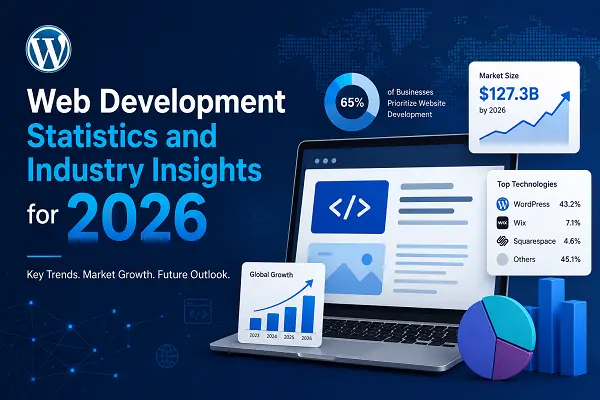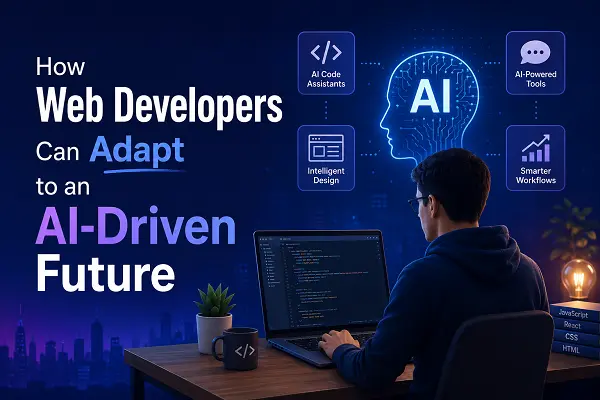
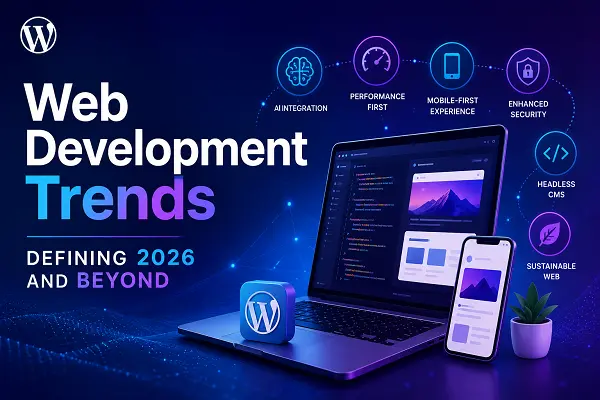
The web development landscape in 2026 has transitioned from a focus on individual feature implementation to a sophisticated ecosystem centered on intelligent automation and performance-first architectures. Developers are no longer just writing code; they are orchestrating complex, AI-driven environments that prioritize speed, security, and seamless user experiences.
The AI-Driven Development Lifecycle
Artificial Intelligence has moved beyond the experimental phase, becoming a fundamental component of the professional web development stack. It now dictates how teams approach everything from initial architecture to long-term maintenance.
-
Agentic Workflows: Developers now oversee autonomous AI agents capable of scaffolding full-stack flows, tracing complex data paths, and identifying edge cases. This shifts the developer’s role toward architectural oversight and high-level decision-making.
-
Hyper-Personalization: Applications now use machine learning models to adapt interfaces in real time. By analyzing user behavior, sites automatically adjust layout components, content recommendations, and interaction flows to suit individual preferences.
-
Predictive Optimization: Beyond simple performance monitoring, AI tools now predict potential bottlenecks before they occur. These systems automate image compression, resource loading, and even A/B testing, ensuring Core Web Vitals remain optimized without manual intervention.
-
Security Automation: As applications absorb more business logic and data access, the attack surface has expanded. Defensive AI now scans codebases for vulnerabilities, implements automated security patches, and hardens APIs against injection attacks in real time.
Architectural Shifts in Modern Web Stacks
The industry has moved toward standardized, cohesive structures that eliminate the overhead of manually managing fragmented toolsets. This evolution favors speed and long-term maintainability.
-
Meta-Framework Dominance: The era of manual routing and configuration is over. Industry-standard meta-frameworks now act as the default starting point, handling data fetching, caching, and server-side rendering within a unified stack.
-
Edge-First Execution: By moving compute power to the edge, closer to the user’s location, developers are achieving near-instant load times. This architectural approach minimizes latency and ensures high performance even under heavy traffic.
-
Headless and Decoupled Systems: Decoupling the frontend from the backend via API-first architectures allows businesses to scale components independently. This modularity ensures that content management systems, e-commerce engines, and user interfaces can evolve without requiring a total system rewrite.
-
TypeScript as the Baseline: Type safety is no longer considered an optional upgrade. It is now the professional standard, providing end-to-end reliability across both client-side and server-side code, which significantly reduces runtime errors at scale.
Scaling User Experiences with Emerging Technologies
The future of web interaction is becoming increasingly immersive and inclusive. Developers are leveraging new capabilities to blur the line between static web pages and high-performance applications.
Progressive Web Apps (PWAs) have evolved into robust alternatives to native mobile applications, offering offline capabilities, push notifications, and near-instant load times. Simultaneously, WebAssembly is opening the door for desktop-grade performance in the browser, enabling complex tasks like real-time 3D rendering, video editing, and heavy data visualization. As these technologies mature, the web continues to transform into a high-utility environment that rivals native software in both power and responsiveness.
Conclusion
Web development in 2026 is defined by the intelligent integration of automation and performance-centric design. Success in this field now requires a balance of strong engineering fundamentals and the ability to orchestrate AI-powered tools effectively. As meta-frameworks, edge computing, and modular architectures continue to refine the industry, the focus remains clear: building secure, fast, and highly personalized digital ecosystems that prioritize the human user experience above all else.
Frequently Asked Questions
How is AI changing the daily workflow of a web developer?
AI has shifted the focus from writing boilerplate code to architectural design. Developers now use AI agents to automate routine tasks, debug complex flows, and generate functional components, allowing them to concentrate on high-level problem-solving.
Why are meta-frameworks now the industry standard?
Meta-frameworks provide a cohesive stack for routing, rendering, and API management. They reduce setup overhead and enforce best practices, allowing teams to build scalable, high-performance applications faster than with manual configurations.
What is “Edge-First” architecture?
It is the practice of running application logic and rendering closer to the user, typically on distributed cloud servers. This significantly reduces latency and load times, resulting in a snappier, more responsive website.
Is TypeScript necessary for modern web projects?
Yes. In 2026, TypeScript is the baseline for professional development. It provides end-to-end type safety, which is essential for managing large, complex codebases and preventing bugs during collaborative development.
How do PWAs compare to native mobile apps today?
PWAs in 2026 offer near-native performance, offline support, and device-level notifications. They are increasingly preferred by businesses because they are easier to maintain and work across all platforms without the need for separate app store deployments.