
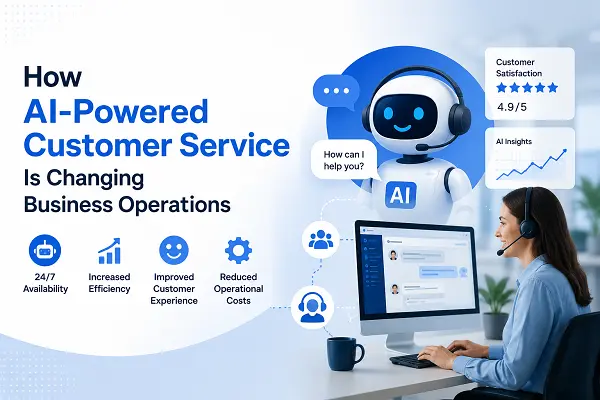
The integration of artificial intelligence into customer service channels has evolved from a novel technological experiment into a fundamental operational strategy. Organizations are abandoning rigid, rule-based chatbots in favor of sophisticated generative engines capable of understanding human intent, sentiment, and context. This shift fundamentally alters how companies allocate internal resources, manage support queues, and analyze client satisfaction data.
Rather than removing the human element, smart automation acts as an operational layer that handles high-volume, repetitive inquiries instantly. This restructuring allows human agents to escape the exhausting cycle of answering basic troubleshooting questions and instead focus on complex, high-value client dilemmas. The result is a highly scalable support model that operates continuously without exponentially increasing overhead costs.
Redefining Support Efficiency: The Modern Operational Shift
Deploying intelligent systems within customer support departments changes how support workflows function internally. By integrating machine learning models directly into centralized ticketing infrastructures, enterprises can instantly categorize, tag, and route incoming inquiries without manual administrative oversight. This immediate triage process eliminates bottlenecks and dramatically lowers initial response latency.
This operational evolution optimizes internal workflows across several distinct areas:
-
Intelligent Ticket Classification: Incoming messages are instantly analyzed for intent, allowing the system to attach accurate metadata and priority levels automatically.
-
Contextual Agent Assistance: Human support personnel receive real-time recommendations, historical context, and draft responses generated by internal systems during live interactions.
-
Predictive Escalation Triggers: Natural language processing monitors conversational sentiment, instantly routing frustrated users to senior managers before a formal complaint is filed.
-
Omnichannel Continuity: Customer context is preserved seamlessly as a conversation moves from social media messaging to email, preventing the user from repeating information.
Driving Strategic Decisions Through Automated Sentiment Analysis
Beyond immediate problem resolution, intelligent support systems act as a powerful continuous feedback loop for product development and executive leadership. Every digital conversation contains unstructured data regarding product flaws, user frustrations, and missing features. Automated text analysis converts these raw interactions into clean, structured intelligence metrics.
Transforming customer conversations into actionable corporate strategy follows a specific, data-driven methodology:
-
Macro Trend Extraction: Aggregating thousands of daily chat logs to pinpoint sudden spikes in specific technical issues, alerting engineering teams to system bugs immediately.
-
Product Roadmap Refinement: Tagging recurring feature requests or usability complaints to help product managers prioritize future updates based on quantitative user demand.
-
Customer Churn Prevention: Identifying accounts that regularly exhibit negative sentiment during service interactions, triggering proactive customer success outreach.
-
Localized Documentation Updates: Spotting common questions that point to deficiencies in public help centers, allowing teams to rewrite confusing instruction manuals.
Balancing Technological Integration with E-E-A-T and User Trust
Maintaining high Experience, Expertise, Authoritativeness, and Trustworthiness (E-E-A-T) requires a careful approach to automated communications. If an automated system provides inaccurate technical troubleshooting or handles personal data poorly, brand authority collapses immediately. True helpfulness relies on strict quality parameters, human-in-the-loop oversight, and absolute operational transparency.
Enterprise support systems must be tethered strictly to verified, internal knowledge bases rather than being allowed to pull answers freely from the open web. This sandboxed architecture ensures that information delivered to clients is consistently factual and compliant with organizational policies. Furthermore, clear signposting that lets users know when they are interacting with software rather than a human builds long-term institutional trust.
Conclusion
Automated service systems are completely rewriting the rules of corporate operations by turning support departments from cost centers into engines of efficiency and data generation. By offloading mechanical tasks to intelligent software, companies create more sustainable environments for human agents while delivering rapid answers to consumers. Businesses that master this hybrid balance will build a lasting competitive advantage through operational speed and superior consumer insight.
FAQs
Will adopting automated support lead to the complete elimination of human agents?
No, it shifts their focus. Automation resolves standard, repetitive queries, which allows human personnel to dedicate their time to complex troubleshooting, relationship management, and high-stakes problem-solving that require empathy and advanced critical thinking.
How do modern service systems handle complex, multi-part technical questions?
When a query exceeds the system’s confidence threshold, it packages the conversation history and passes it to a human specialist. The agent receives a summary of the issue, preventing the customer from needing to re-explain their problem.
What is the best way to prevent automated tools from hallucinating incorrect answers?
Systems must use Retrieval-Augmented Generation (RAG) tied exclusively to your company’s internal documentation, product manuals, and verified policies. Restricting the data pool ensures the answers remain accurate and contextually relevant.
How does automated customer service lower operational overhead?
It manages infinite concurrent chats simultaneously without requiring extra hiring. By resolving a massive percentage of baseline tickets automatically, companies can scale their client base while keeping support costs relatively flat.
Can small businesses implement these advanced support systems effectively?
Yes, cloud-based platform integrations have democratized access to advanced natural language tools. Smaller operations can deploy pre-trained customer service models directly into their existing content management or CRM setups with minimal coding.