Shoppers add items to their online shopping carts every day only to leave without completing the purchase. This behavior represents a massive revenue leak for e-commerce stores, but it also highlights a highly motivated audience. An automated email sequence bridges this gap, gently guiding hesitant shoppers back to your checkout page to finalize their transaction.
Why Online Shoppers Leave Before Buying
Understanding the psychology of cart abandonment allows you to address specific friction points in your recovery messages. Buyers rarely walk away because they lose interest in the product entirely.
-
Unexpected Checkout Costs: Extra fees, high shipping rates, or sudden taxes added at the final step cause immediate sticker shock.
-
Complex Account Creation: Forcing users to fill out long registration forms creates unnecessary roadblocks.
-
Comparison Shopping: Many users treat the shopping cart as a wishlist while they check competitor pricing or look for discount codes.
-
Technical Glitches: Slow page load speeds, timed-out sessions, or restricted payment options force buyers to give up.
The Ultimate 3-Step Abandoned Cart Email Blueprint
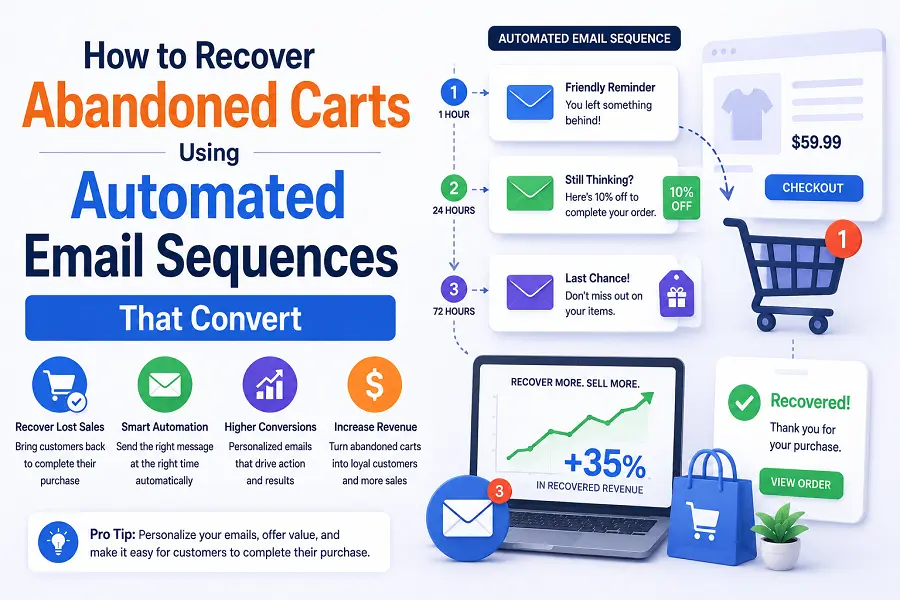
A single email is rarely enough to maximize recoveries. A structured, multi-stage automation sequence addresses different consumer mindsets over a 48-hour window without spamming the inbox.
1. Email One: The Helpful Reminder (Send within 1 hour)
The initial message should assume a technical issue or a simple distraction occurred. Keep the tone helpful, light, and customer-centric. Show an image of the specific item left behind and include a direct link to the saved checkout session. Avoid offering discounts at this stage, as doing so trains shoppers to abandon carts intentionally to get lower prices.
2. Email Two: Overcoming Objections & Building Trust (Send within 24 hours)
If the first reminder fails, address the unspoken hesitations holding the buyer back. Use this email to highlight your return policy, satisfaction guarantees, or secure payment methods. Incorporate social proof, such as user reviews or star ratings for the exact products in their cart, to validate their purchasing decision.
3. Email Three: The Urgency Incentivizer (Send within 48 hours)
The final email introduces a gentle sense of scarcity or a minor incentive to trigger immediate action. Inform the shopper that their cart will expire soon or that inventory is running low. Alternatively, offer a small perk like free shipping or a 10% discount code to convert price-sensitive buyers who are still on the fence.
Optimizing Recovery Emails for Maximum Conversions
Writing compelling copy is only half the battle. To ensure your automated sequence actually generates revenue, focus on technical and behavioral optimization.
Craft short, curiosity-driven subject lines that clearly state what is inside. Lines like “Did you forget something?” or “Your cart is waiting” perform exceptionally well. Ensure every email features a single, high-contrast Call-to-Action (CTA) button that reads clearly on mobile devices. Testing different send times, button colors, and copywriting hooks via A/B testing will help refine the sequence over time based on your specific audience data.
Conclusion
Automated email sequences turn lost opportunities into predictable revenue by addressing customer hesitation at the exact right moment. By structuring your campaign around helpful reminders, social proof, and subtle urgency, you create a seamless path for shoppers to return and buy. Implement this framework, monitor your analytics, and watch your conversion rates rise.
Frequently Asked Questions
What is a healthy recovery rate for an abandoned cart sequence?
A successful e-commerce email sequence typically recovers between 10% and 15% of abandoned shopping carts. Anything above 10% indicates your timing, copy, and incentives align well with buyer expectations.
Should I always offer a discount code in my recovery emails?
No, saving discounts for the final email prevents profit margin erosion. Offering incentives too early rewards abandonment behavior and devalues your brand.
How many emails should be in a cart recovery sequence?
A three-email series offers the best balance between maximizing conversion opportunities and respecting the shopper’s inbox. Sending more than three messages often increases unsubscribe rates.
Does cart abandonment automation work for B2B e-commerce?
Yes, though the messaging should focus on logic, bulk pricing advantages, and direct customer support contacts rather than quick discount codes.
How do I track the success of my automated campaign?
Monitor your email open rates, click-through rates, and total recovered revenue within your email marketing platform or Google Analytics dashboard.