I ruined my first three Manhattans. Not because I got the ratios wrong — I followed the recipe to the letter — but because I grabbed whatever rye was sitting on the shelf at the store, figuring whiskey is whiskey. It isn’t. The bottle I picked was thin, peppery in a harsh way, and it turned what’s supposed to be a rich, slightly sweet, faintly spicy drink into something that tasted like I’d dropped bitters into a shot of hot sauce.
That’s the thing nobody tells you when you start making Manhattans at home: the whiskey isn’t just an ingredient, it’s basically the whole drink. Vermouth and bitters support it. They don’t fix it.
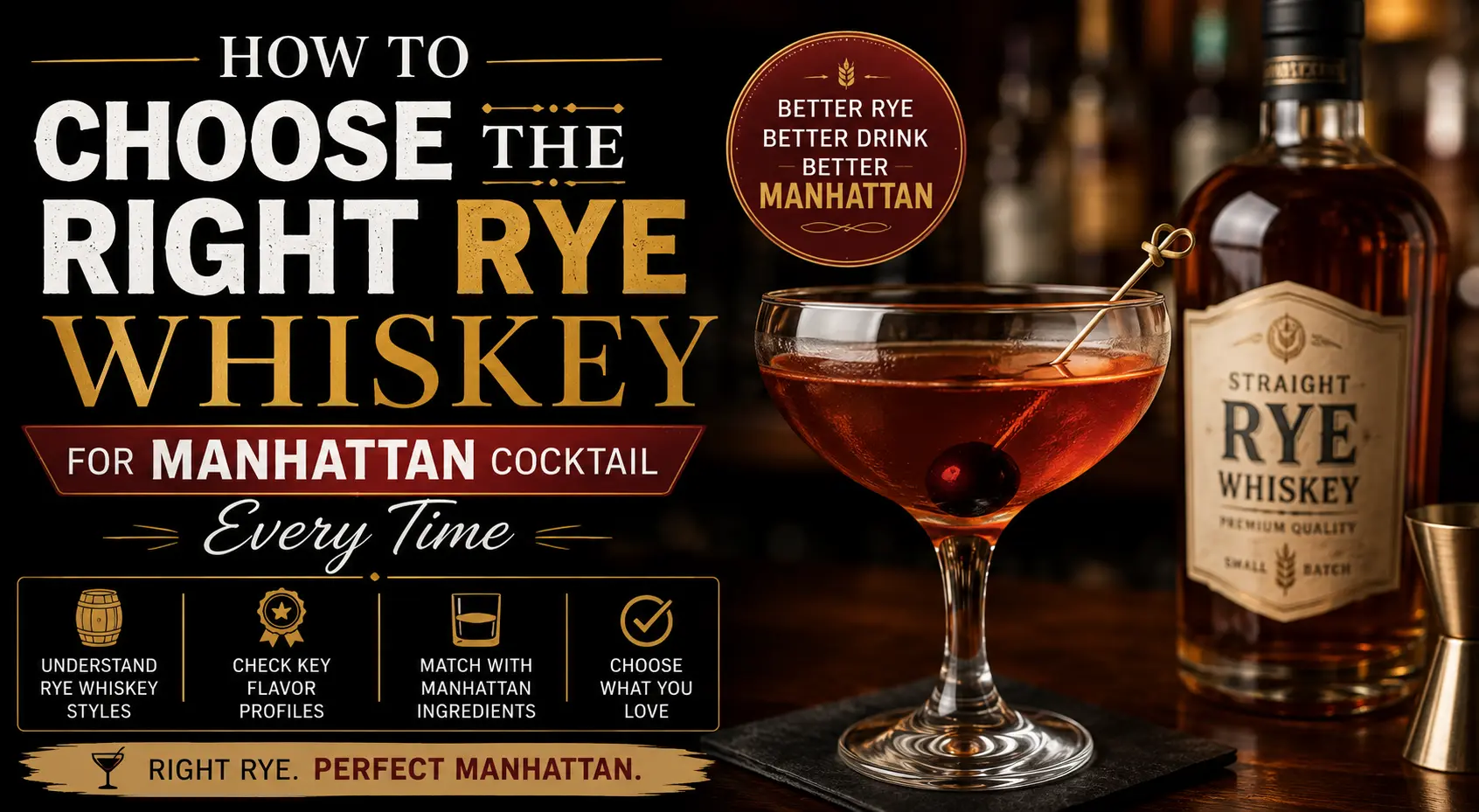
So if you’ve landed here trying to figure out which rye whiskey for Manhattan cocktail actually works, here’s the short version — then I’ll walk you through why.
The Quick Answer
For a classic Manhattan, look for a rye that’s at least 90-100 proof, aged a minimum of 4 years, with a mash bill that leans rye-heavy but isn’t screaming “spice bomb” on its own. Rittenhouse Rye 100 Proof, Sazerac Rye, and Old Overholt are the three most reliable, widely available options for this. If you want something a notch more refined for sipping neat and mixing, Michter’s Straight Rye or Willett Rye are worth the extra cost.
That’s your starting point. Now let’s get into why those particular bottles work and others don’t.
Why Rye Instead of Bourbon in the First Place?
Quick history note, because it actually matters here: the original 1880s Manhattan recipe called for rye, not bourbon. Bourbon Manhattans became popular later, mostly because rye whiskey nearly disappeared in the US after Prohibition — most of the old rye distilleries just never came back. Rye only started showing back up on shelves in a serious way around the mid-2000s.
Rye brings a dry, spicy backbone that bourbon doesn’t have. Bourbon is sweeter and rounder because of its corn-heavy mash bill (at least 51% corn, often closer to 70%). Rye whiskey, by law, needs at least 51% rye grain, and a lot of the ryes worth buying for cocktails sit closer to 95%.
That spice is exactly what cuts through the sweet vermouth in a Manhattan. Use a soft bourbon instead, and the drink can turn syrupy. Not bad, exactly — just a different cocktail wearing the same name.
What Actually Matters When You’re Choosing a Bottle
Proof: Don’t Go Below 90
This is the one rule I’d tell a beginner to actually follow strictly. A Manhattan is stirred with ice, which dilutes it. If you start with an 80-proof rye, by the time it’s strained into the glass, you’re left with something watery and flat — the whiskey flavor just can’t hold up.
Rittenhouse Rye, for example, sits at 100 proof (50% ABV). Even after proper dilution, it still tastes like a drink, not flavored water. This isn’t a minor preference thing — I’ve made the same Manhattan side-by-side with an 80-proof rye and a 100-proof rye, same brand family, and the difference was obvious to everyone at the table, including people who don’t usually notice whiskey details.
Age: 4 Years Minimum, But Older Isn’t Always Better
Younger rye (under 2 years) tends to taste harsh and one-note — all pepper, no depth. Somewhere around the 4-6 year mark, you start getting notes of vanilla, dried fruit, maybe a little caramel from the barrel, which round out that spice instead of just adding more of it.
Here’s the caveat though: past a certain point, an older, more expensive rye can actually be too refined for a Manhattan. You paid for subtlety, and then you drowned it in sweet vermouth and bitters. If you’ve got a 12-year rye you’re proud of, drink it neat. Save something more assertive for the cocktail.
Mash Bill: Don’t Chase the Highest Rye Percentage
There’s a trend of bottles bragging about being “95% rye,” as if higher is automatically better. For sipping neat, sure, that intensity can be interesting. For a Manhattan, I’d actually push back on this a bit — something in the 51-75% rye range, with corn or malted barley rounding it out, often mixes more smoothly. It still gives you the spice, but it plays nicer with the vermouth instead of fighting it.
Rittenhouse sits around 80% rye and still works beautifully in a Manhattan, so this isn’t an absolute rule — just something to keep in mind if a drink tastes overly sharp and you can’t figure out why.
Best Rye Whiskey for Manhattan Cocktail, By Budget
Under $25 — Everyday Bottle Old Overholt (80 proof) or Rittenhouse Rye (100 proof, usually $22-28). Rittenhouse is the better pick if you can find it; the extra proof genuinely matters here.
$25-45 — The Sweet Spot Sazerac Rye, Bulleit Rye, or Wild Turkey 101 Rye. This is where most home bartenders should probably be shopping. Sazerac in particular has a loyal following among bartenders for a reason — it’s balanced, not too aggressive, and holds up well against sweet vermouth.
$45-80 — Step-Up Bottles Michter’s US*1 Straight Rye or Woodford Reserve Rye. Smoother, more layered, still assertive enough to come through in the glass.
$80+ — Worth It If You’re a Whiskey Person Anyway Willett Family Estate Rye, WhistlePig 10 Year. Honestly? For most people making Manhattans a couple times a month, this is overkill. I wouldn’t tell a beginner to start here — save it for when you already know what you like.
A Practical Test I Actually Use
If you’re standing in a liquor store unsure, here’s a trick: check the proof on the label first, then the age statement. If it’s under 90 proof or has no age statement listed at all with a bottom-shelf price, it’s probably going to disappear in the mix. That’s not a snobby take — it’s just how dilution and mixing math work.
Common Mistakes People Make
- Using flavored or “spiced” rye. These are made for shots and sodas, not stirred cocktails. The added flavoring clashes with vermouth almost every time.
- Assuming bourbon and rye are interchangeable. They’re not wrong, exactly, just different drinks. If a recipe specifies rye, there’s usually a reason.
- Buying the cheapest bottle “just to test it out.” I get the instinct, but a bad first Manhattan is exactly how people convince themselves they don’t like the drink. It’s usually the whiskey’s fault, not yours.
- Over-stirring or under-stirring. Not a whiskey issue, but it’ll undo good whiskey fast. Aim for 30 seconds with ice, no more.
FAQ
1. What’s the best rye whiskey for Manhattan cocktail on a budget?
Rittenhouse Rye 100 Proof is the most commonly recommended budget bottle among bartenders, usually running $22-28.
2. Can I use bourbon instead of rye for a Manhattan?
Yes, and it’s a popular variation — just know it’ll taste sweeter and rounder, not the classic dry-spicy profile.
3. Does the proof of the rye really matter that much?
Yes. Anything under 90 proof tends to taste diluted once it’s stirred with ice and strained.
4. Is a more expensive rye always better for a Manhattan?
No. Very refined, expensive ryes can lose their character once mixed with sweet vermouth and bitters — save those for sipping neat.
5. What proof rye is ideal for a Manhattan?
Somewhere between 90 and 110 proof is the sweet spot for most people.
6. How long should a Manhattan be stirred?
About 30 seconds with plenty of ice — enough to chill and dilute without over-watering it.
7. What vermouth pairs best with rye in a Manhattan?
Sweet red vermouth, like Carpano Antica or Dolin Rouge, is standard. Carpano Antica tends to pair especially well with spicier ryes.
8. Why does my Manhattan taste too sharp or peppery?
It’s often the mash bill — try a rye with a lower rye percentage (closer to 51-75%) instead of a high-rye bottle.
9. Is Sazerac Rye good for Manhattans?
Yes, it’s one of the most recommended options by professional bartenders for its balance.
10. What’s a good rye whiskey for someone new to Manhattans?
Rittenhouse Rye or Bulleit Rye — both affordable, high enough proof, and forgiving if your ratios aren’t perfect yet.
11. Should I use rye that’s aged less than 4 years?
It’s not ideal. Younger rye tends to taste harsh and one-dimensional in a stirred cocktail.
12. What’s the difference between straight rye and blended rye?
Straight rye is aged at least 2 years with no added coloring or flavoring; blended rye can include neutral spirits, which usually makes it weaker in a cocktail.
13. Can I make a Manhattan with flavored rye whiskey?
It’s not recommended — flavored ryes are built for casual sipping or shots, not for balancing with vermouth and bitters.
14. How much does the whiskey really affect the final drink compared to vermouth or bitters? Significantly. The whiskey is 2-2.5 oz of a roughly 3-3.5 oz drink, so it’s carrying most of the flavor.
15. What’s a good step-up bottle once I know I like Manhattans?
Michter’s US*1 Straight Rye or Woodford Reserve Rye are common recommendations for stepping beyond the basics.