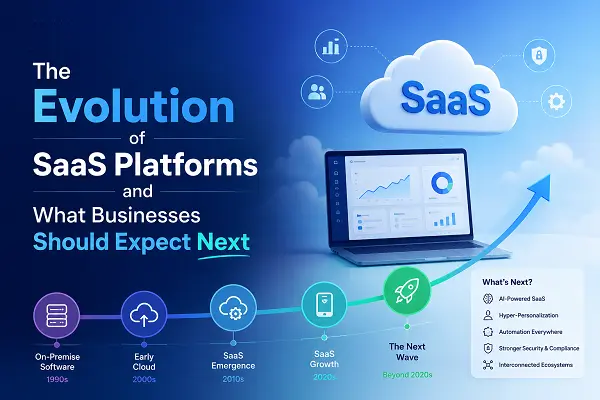
The software-as-a-service (SaaS) landscape in 2026 has moved beyond simple subscription models, evolving into a sophisticated ecosystem of intelligent, interconnected platforms. Businesses today no longer seek isolated tools to solve individual problems; they require cohesive, adaptive ecosystems that prioritize automation, interoperability, and measurable outcomes. This shift marks the transition from software as a system of record to software as a system of execution.
The Pillars of Modern SaaS Architecture
In 2026, the value of a SaaS platform is determined by its ability to integrate deeply into a company’s workflow while remaining flexible enough to adapt to rapid market changes. The following characteristics now define market-leading platforms:
-
Autonomous AI Integration: Artificial intelligence is no longer an add-on but the core engine. Modern platforms utilize agentic AI to autonomously execute complex, multi-step workflows—such as financial forecasting or lead qualification—without requiring constant human input.
-
Composability and Interoperability: Businesses now favor “composable” architectures where core platforms act as a central hub. Through robust API-first designs, these systems allow organizations to swap, add, or remove specialized tools without disrupting the entire tech stack.
-
Outcome-Oriented Pricing: The traditional fixed per-seat model is being supplanted by usage-based and outcome-driven pricing. This alignment ensures that costs scale directly with the value a business derives from the software, rather than the number of active users.
-
Democratized Development: The rise of low-code and no-code tooling has empowered non-technical teams to customize their software environments. This shift reduces the reliance on IT departments for minor feature adjustments, enabling teams to build proprietary workflows faster.
Strategic Expectations for Enterprise Buyers
As organizations continue to consolidate their digital estates, the selection process for new software has become more rigorous. Business leaders should prepare for these shifts in how technology is managed and scaled:
-
Consolidation into Ecosystems: Companies are aggressively replacing fragmented “point solutions” with unified platforms. By centralizing operations, businesses reduce security risks, minimize administrative overhead, and ensure a single source of truth across departments.
-
FinOps as a Core Discipline: Because usage-based pricing can lead to budget volatility, specialized financial operations (FinOps) for SaaS have become essential. Monitoring consumption patterns in real-time is now required to prevent runaway costs during periods of high AI utilization.
-
Security as a Competitive Differentiator: With the attack surface expanding, trust and compliance are primary procurement criteria. Leading providers now offer proactive, AI-monitored security frameworks that identify vulnerabilities before they can be exploited.
-
Localization and Global Readiness: As businesses expand, they increasingly demand SaaS platforms that support native compliance with regional data privacy laws, ensuring seamless operation across international borders without needing multiple regional vendors.
Navigating the Future of SaaS Adoption
Looking ahead, the divide between “AI-enabled” and “AI-native” platforms will continue to widen. While the former offers superficial feature enhancements, AI-native platforms are built from the ground up to optimize for efficiency, speed, and autonomous intelligence. Organizations that prioritize these native platforms will gain a distinct advantage in agility and operational performance.
Conclusion
The SaaS market in 2026 demands a strategic shift from passive software usage to active platform management. By focusing on composable architecture, usage-based economics, and the integration of autonomous agents, businesses can transform their software stack from a necessary cost into a powerful engine for innovation and growth. Success in the coming years will belong to those who treat their software ecosystem not as a collection of static subscriptions, but as a dynamic, intelligent partner.
Frequently Asked Questions
How does usage-based pricing change budget management?
Usage-based pricing aligns costs with value but introduces volatility. It requires a FinOps approach to monitor consumption patterns closely and forecast costs accurately, preventing unexpected budget spikes.
What is the difference between an AI-enabled and an AI-native platform?
AI-enabled platforms add AI features to existing, traditional software. AI-native platforms are designed around intelligent agents and data models from the ground up, allowing them to automate workflows and make decisions autonomously.
Why are companies moving away from “point solutions”?
Point solutions create fragmented data and administrative bloat. Companies are consolidating into platform ecosystems to unify workflows, improve security visibility, and reduce the number of vendors managed by IT.
How do low-code tools impact the role of IT?
Low-code tools shift the IT role from “builders” to “governance leaders.” They allow business units to customize tools themselves, while IT ensures these tools remain secure, compliant, and integrated with the central platform.
What is “composability” in SaaS?
Composability refers to software design that allows businesses to assemble or modify their tech stack by swapping modules. It prevents vendor lock-in and allows the system to evolve as the business grows.