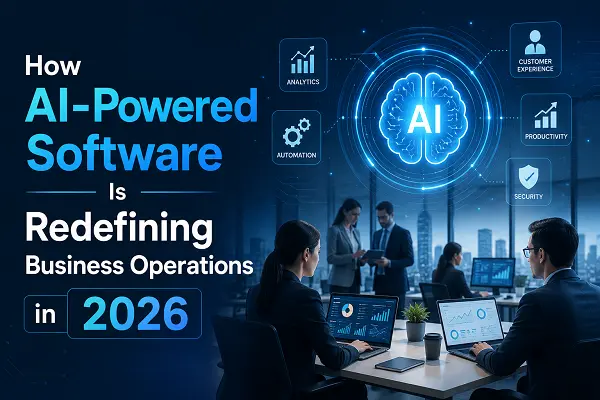
Artificial intelligence has transitioned from an experimental novelty to the foundational architecture of modern business operations. By 2026, the focus has shifted from mere experimentation to the integration of intelligent, autonomous systems that drive measurable financial outcomes. Organizations are no longer using AI simply to analyze data; they are embedding it into core processes to anticipate market changes, automate complex workflows, and personalize every facet of the customer experience.
The Operational Shift Toward Intelligence
The integration of AI into daily operations represents a move toward proactive management. Instead of relying on manual oversight and reactive strategies, leadership teams now utilize “decision engines” that process vast amounts of real-time information to suggest the next best action.
-
Agentic Workflows: Modern enterprises are deploying autonomous AI agents that go beyond simple task automation. These agents can handle complex, multi-step sequences—such as end-to-end invoice processing, supply chain adjustments, or personalized marketing campaigns—with minimal human intervention.
-
Predictive Maintenance and Analytics: By monitoring internal sensors and external market data, businesses now anticipate equipment failures or supply chain bottlenecks before they manifest. This foresight minimizes costly downtime and optimizes inventory distribution.
-
Invisible Infrastructure: AI is increasingly becoming an “invisible” layer of business software. Rather than navigating separate tools, employees interact with systems that automatically surface relevant insights, draft communications, and organize data, allowing staff to focus on high-value creative and strategic initiatives.
-
Domain-Specific Specialization: The era of one-size-fits-all AI is waning. Enterprises are now prioritizing domain-specific models trained on proprietary data. This specialization ensures higher accuracy in niche fields like financial underwriting, healthcare diagnostics, or technical manufacturing.
Strategic Benefits of AI-Driven Transformation
Implementing intelligent software is fundamentally changing the metrics by which companies measure success. By prioritizing efficiency and precision, businesses are achieving growth without the proportional increase in operational overhead.
-
Hyper-Personalization at Scale: Companies now deliver bespoke experiences to individual customers by analyzing purchase history, behavioral patterns, and real-time intent. This deep customization drives higher lifetime value and strengthens brand loyalty.
-
Autonomous Decision-Making: Predictive analytics models provide real-time dashboards that allow leaders to adjust pricing strategies and resource allocation instantly. This reduces the cognitive load on management and significantly shortens the time between identifying an issue and executing a fix.
-
Risk and Compliance Automation: AI governance platforms now monitor data usage and regulatory compliance in real time. By automating audit trails and flagging potential bias or security risks, these systems provide a critical layer of protection in an increasingly complex digital landscape.
Building a Culture of Human-AI Collaboration
The successful implementation of AI does not focus on replacement, but on the augmentation of human potential. When routine tasks are handled by intelligent software, the focus of the workforce shifts toward strategy, innovation, and complex relationship management. Organizations that succeed in 2026 are those that provide their employees with the training and incentives to oversee these systems, ensuring that human judgment remains at the heart of critical business decisions.
Conclusion
AI is no longer just a technological upgrade; it is a business requirement. As enterprises shift toward autonomous execution and specialized intelligence, the gap between AI-native organizations and those still reliant on manual workflows is widening. Businesses that proactively embed AI into their core infrastructure, prioritize data governance, and foster human-AI collaboration are setting the standard for resilience and profitability in 2026.
Frequently Asked Questions
What is “agentic AI” and why is it important for operations?
Agentic AI refers to systems capable of performing multi-step, autonomous tasks toward a specific goal. It is important because it allows businesses to automate complex processes like end-to-end supply chain management without needing constant human input.
How does specialized AI outperform general-purpose tools?
Specialized models are trained on domain-specific data and regulatory frameworks. This leads to higher accuracy, better compliance, and faster return on investment compared to generic AI tools that are not optimized for a specific industry’s nuances.
Will AI integration lead to job losses in 2026?
The primary trend in 2026 is augmentation rather than replacement. AI handles repetitive, data-intensive tasks, which frees employees to focus on higher-value activities like strategic planning, creativity, and customer relationship management.
What are the biggest risks when implementing AI?
Key risks include insufficient data quality, “drift” where model performance degrades over time, and security vulnerabilities. Organizations address these by implementing robust AI governance platforms that track model usage and enforce security policies.
How can small businesses compete with large enterprises in AI adoption?
Small businesses can leverage low-code/no-code AI platforms to build and customize intelligent workflows without needing large internal IT teams, allowing them to remain agile and implement high-ROI solutions quickly.