Choosing where to allocate your marketing budget requires a clear understanding of financial returns and audience behavior. Businesses frequently weigh the long-term compounding effects of organic content against the immediate, direct reach of traditional paid media. Both avenues aim to drive revenue, but they function on completely different financial models and timelines.
As search engines prioritize original, high-value information, the cost-efficiency gap between these two strategies continues to widen. Understanding how each approach impacts your bottom line is essential for maximizing your marketing spend this year.
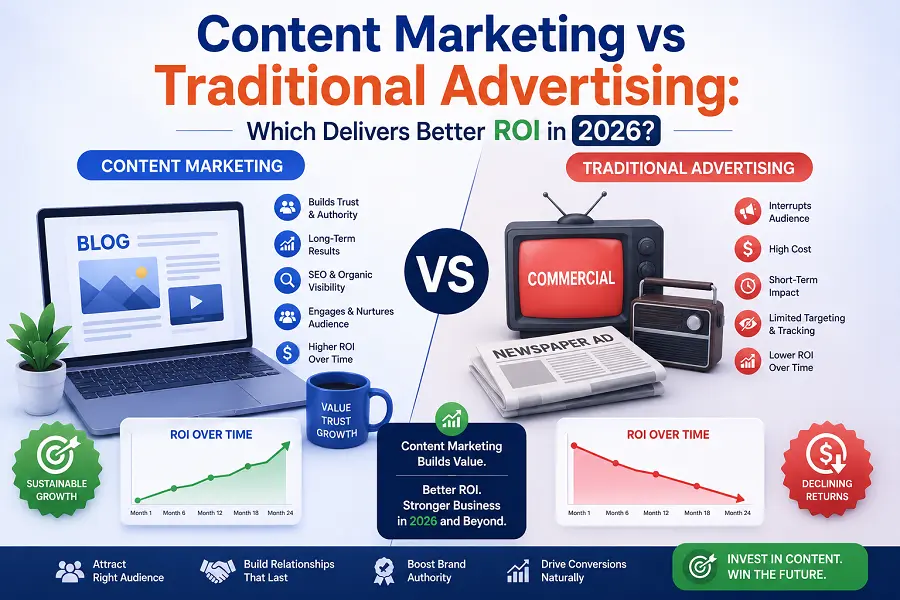
The Long-Term Compounding Returns of Value-Driven Content
Organic content acquisition works like a financial investment portfolio. While it requires upfront resources for research and creation, the assets generated continue to attract, educate, and convert prospects long after the initial production phase.
-
Lower Cost Per Acquisition: Building owned media assets costs significantly less than buying recurring ad space, drastically reducing the cost per inbound lead.
-
Sustained Lead Generation: A single well-optimized informational asset can capture organic search traffic and generate customer inquiries for years without requiring ongoing daily ad spend.
-
Compounding Search Authority: Consistently publishing original data and insights expands your overall digital footprint, increasing organic visibility across complex search networks and AI discovery engines.
-
Higher Conversion Readiness: Educated prospects who discover a business through informational content usually move through the sales funnel faster because baseline trust is established before the first sales interaction.
Why Traditional Advertising ROI Faces Immediate Diminishing Returns
Traditional advertising operating models rely entirely on consistent, active capital injections. Paid media campaigns offer unmatched speed for brand visibility, but the momentum halts completely the moment the budget stops flowing.
-
The Instant Off-Switch: Unlike owned content assets, paid advertisements disappear from view as soon as a campaign budget finishes, creating a zero-residual-value scenario.
-
Rising Media Placement Costs: The hyper-competitive nature of ad bidding platforms naturally drives up the cost per click and cost per mille over time, putting downward pressure on net profit margins.
-
Pervasive Consumer Ad Fatigue: Modern audiences actively utilize ad-blocking software and naturally develop banner blindness, lowering overall engagement and click-through rates.
-
Lack of Trust Accumulation: Interruptive outbound promotions focus on immediate transactions rather than relationship building, requiring continuous retargeting to stay top-of-mind.
Aligning Your Strategy for Maximum Financial Efficiency
Maximizing financial returns requires a balanced view of production speed versus sustainable asset growth. The most profitable modern systems use quick targeted paid campaigns to gather initial customer intent data, then funnel those insights directly into a robust organic content pipeline.
Investing heavily in original proprietary research, short-form video explanations, and deeply relevant text assets creates a defensive marketing moat. This method protects businesses from fluctuating ad marketplace pricing while securing predictable organic lead generation.
Conclusion
When evaluating performance metrics, content marketing delivers superior long-term return on investment by building permanent, compounding digital assets that continuously lower customer acquisition costs. Traditional advertising remains a useful tool for short-term promotional spikes or rapid testing. However, sustainable revenue growth relies on creating helpful, user-focused content that earns customer trust naturally.
FAQs
Which strategy provides a faster return on investment?
Traditional advertising provides much faster initial returns because paid campaigns launch instantly and put products directly in front of target audiences within hours. Content marketing requires a longer developmental runway, often taking several months to show significant organic traction and revenue generation.
Why does content marketing cost less over time?
Content creation costs decrease relative to performance because the initial production expense is a one-time event. Once an informational asset ranks well or builds an audience, it continues to capture leads automatically without requiring a fee for every click or view.
Can a business completely eliminate traditional advertising?
Eliminating paid advertising depends entirely on business goals and market maturity. Established brands with strong organic search authority can often rely solely on content pipelines, while new brands or companies launching time-sensitive products typically need a blend of both.
How does consumer trust differ between these two models?
Trust levels are substantially higher for organic content because it solves specific user problems without demanding an immediate financial transaction. Outbound advertising is inherently transactional and interruptive, which can occasionally trigger consumer skepticism.
What content formats drive the highest financial returns?
Short-form educational videos, proprietary industry research data, and deeply personalized email workflows yield the highest performance. These formats break down complex topics quickly and build authoritative connections with decision-makers.