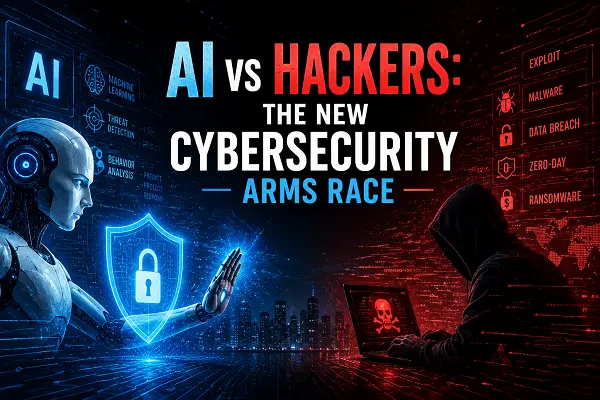

The cybersecurity landscape has reached a critical inflection point. As organizations accelerate their adoption of artificial intelligence to drive efficiency, malicious actors are simultaneously weaponizing these same technologies to conduct campaigns of unprecedented speed and precision. The era of manual, human-led hacking is being rapidly superseded by automated, “agentic” systems capable of identifying and exploiting vulnerabilities at a pace no traditional security team can match.
The Evolution of AI-Driven Adversarial Tactics
Modern attackers are no longer simply “breaking in”; they are learning from their environment. By utilizing autonomous agents and advanced generative models, threat actors have transformed the mechanics of digital compromise.
-
Agentic AI Exploitation: Hackers now deploy autonomous software agents that can independently scan networks, identify misconfigured APIs, and execute complex exploit chains without human intervention.
-
Hyper-Personalized Social Engineering: Traditional phishing is obsolete. AI models now craft highly specific lures based on an individual’s internal communication patterns, social media activity, and professional history, making impersonation nearly impossible to distinguish from genuine requests.
-
Deepfake Identity Deception: The use of real-time voice and video synthesis has compromised standard authentication. Attackers can now bypass traditional verification by mimicking the likeness or voice of executive leadership during sensitive financial transactions.
-
Adaptive Malware: Malicious code has become self-evolving. Modern malware can detect the presence of defensive tools and rewrite its own execution patterns or signature, allowing it to remain dormant or modify its behavior to evade detection in real-time.
Strategic Frameworks for Modern Defense
Protecting an organization in 2026 requires shifting away from static, perimeter-focused security toward a model of continuous, identity-centric resilience.
-
Adopt Identity-First Security: Since the traditional network perimeter is effectively gone, identity must be the new firewall. Every access request—whether from a human user or a machine agent—must be verified against real-time risk signals, such as device health, behavior patterns, and geolocation.
-
Operationalize Zero Trust Architecture: Move beyond best practices to formalize Zero Trust as a mandatory operational standard. This ensures that no device or user is inherently trusted and that access is strictly limited to the minimum necessary for specific tasks.
-
Implement Continuous Threat Exposure Management: Replace periodic scanning with ongoing, automated assessment cycles. This allows security teams to identify “shadow IT,” forgotten subdomains, or unpatched APIs before they become entry points for automated agents.
-
Enforce AI Governance: Establish strict data boundaries for internal AI tools. IT departments must map where sensitive corporate data is being processed to prevent it from leaking into unauthorized public models or being used as fuel for adversarial training.
-
Utilize “Out-of-Band” Verification: For high-stakes financial operations or sensitive data access, mandate secondary verification channels. Using daily changing “trust codes” or verbal confirmation phrases ensures that even sophisticated deepfake attempts fail to deceive authorized personnel.
The Path Toward Operational Resilience
The primary objective for any security organization today is not achieving the impossible standard of perfect prevention, but rather ensuring operational continuity during an incident. Resilience implies the ability to detect, contain, and recover from a compromise without catastrophic business disruption. By integrating automated incident response frameworks, businesses can isolate compromised network segments and restore services autonomously, ensuring that a single successful exploit does not result in a total organizational shutdown.
Conclusion
The rise of AI-powered cyber threats is not a future possibility but a current reality. However, organizations can turn the tide by embracing the same intelligence that powers these attacks to fortify their own defenses. Success in this environment requires a disciplined commitment to identity hygiene, proactive vulnerability management, and the integration of autonomous security tools. When security is treated as an engine for confidence and operational integrity, it becomes a strategic advantage that allows a business to innovate safely in an increasingly volatile digital world.
Frequently Asked Questions
What is agentic AI in the context of cyber attacks?
Agentic AI refers to autonomous software programs that can set their own goals, make independent decisions, and execute multi-step cyber-attacks without needing a human “hacker” to guide them at every stage.
Why do traditional firewalls struggle against modern AI threats?
Traditional firewalls rely on static rules or known signatures to identify threats. AI-driven attacks are dynamic, meaning they can change their behavior or “look” in real-time to avoid matching any predefined rules, rendering legacy defenses ineffective.
How can businesses verify the authenticity of employees during calls?
Organizations should implement “trust codes”—secret phrases that change on a daily or per-transaction basis—to provide a secure, out-of-band layer of verification that deepfake technology cannot replicate.
Is AI being used to help cybersecurity teams?
Yes, AI is essential for modern defense. Security teams use AI to aggregate signals from across cloud and endpoint environments, automate the triage of massive alert volumes, and identify microscopic anomalies that would be invisible to human analysts.
What is the biggest mistake businesses make regarding AI security?
The most common error is failing to govern internal AI usage. Many organizations allow employees to use AI tools without establishing data boundaries, which leads to sensitive corporate information being inadvertently shared with public models, creating new, massive attack surfaces.