The enterprise threat landscape has evolved into an era of hyper-speed automation. Historically, digital security focused on building robust perimeters to keep intruders out. In the current environment, that model has become obsolete as decentralized workforces and cloud-integrated systems erase traditional boundaries. Security today is no longer a static gatekeeper but a continuous, real-time process of verification and adaptation.
As attackers leverage machine intelligence to execute complex, multi-stage campaigns, organizations must pivot from passive prevention to proactive, operational resilience. The following trends represent the most critical shifts in how modern businesses are securing their digital foundations this year.
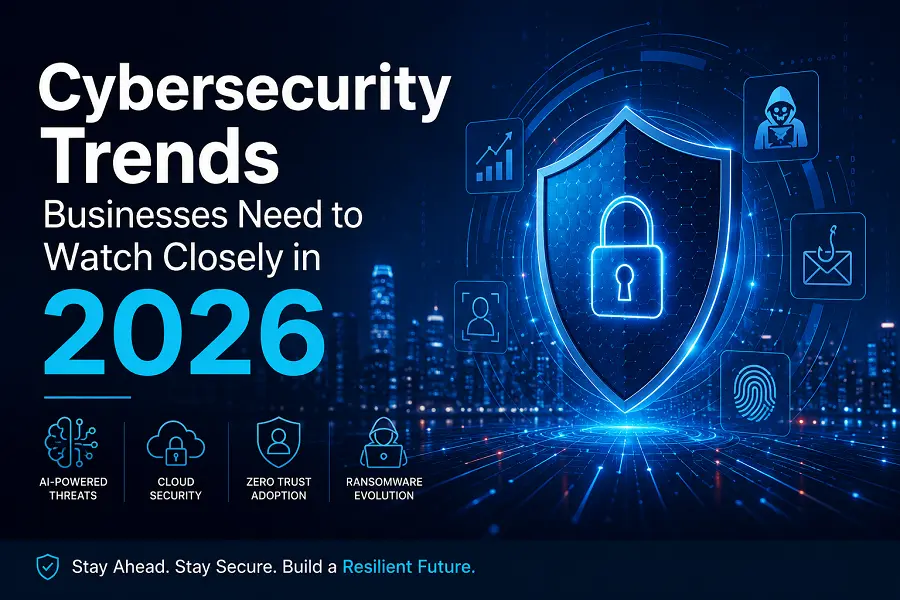
Evolving Vectors in the AI-Powered Threat Landscape
The integration of advanced machine learning into criminal toolkits has fundamentally increased both the scale and precision of modern cyber-attacks.
-
Agentic AI Exploitation: Malicious agents now autonomously probe corporate APIs for weaknesses, executing reconnaissance and exploit chaining at speeds impossible for human attackers to match.
-
Deepfake Identity Deception: The rise of realistic voice and video synthesis has made traditional identity verification methods vulnerable, necessitating the use of “trust codes” or daily verbal confirmation phrases for sensitive financial transactions.
-
Hyper-Personalized Social Engineering: Phishing campaigns have moved far beyond generic templates, utilizing data-rich profiles to craft eerily accurate impersonations of internal leadership and trusted business partners.
-
Adaptive Malware Development: Modern malicious code is designed to learn from its target environment, modifying its execution patterns in real time to evade signature-based detection mechanisms.
Strategic Imperatives for Modern Security Operations
To maintain integrity in a volatile digital environment, leadership must shift away from fragmented point solutions and adopt unified, resilient frameworks.
-
Operationalize Zero-Trust Architectures: Security is now identity-first. Every access request—regardless of origin—must be verified against real-time risk signals, including device health, geolocation, and behavioral patterns, rather than relying on static network permissions.
-
Consolidate Security Platforms: Organizations are moving toward integrated security ecosystems that provide end-to-end visibility. By reducing the number of isolated tools, teams can eliminate “alert fatigue” and respond to genuine threats with greater decisiveness.
-
Implement Continuous Threat Exposure Management: The cycle of periodic scanning is insufficient. Businesses now mandate ongoing, automated assessment cycles that identify and remediate vulnerabilities before they can be leveraged in a breach.
-
Establish Formal Governance for Autonomous Tools: As internal teams deploy AI assistants, IT departments must map and sanitize all data boundaries to prevent sensitive corporate information from leaking into unauthorized or public model training sets.
The Shift Toward Radical Operational Resilience
Organizations are increasingly accepting that no defense system is impenetrable. Consequently, the primary objective of a modern security program has evolved from achieving perfect prevention to maintaining operational continuity during an incident. This shift requires the implementation of automated incident response frameworks that can isolate compromised segments, contain lateral movement, and restore critical services without manual intervention. By treating recovery as a core performance metric, businesses can survive sophisticated ransomware attempts and remain functional while security teams neutralize the threat.
Conclusion
Securing a business in 2026 requires moving beyond legacy concepts of “safe zones.” By embracing identity-first verification, consolidating fragmented security stacks, and prioritizing automated recovery, organizations can navigate the complexities of AI-driven threats. The winners of this new digital era will be those who view security as an engine for confidence and innovation rather than just an unavoidable IT cost.
Frequently Asked Questions
Why is the traditional network perimeter considered dead in 2026?
Distributed workforces, hybrid cloud adoption, and mobile endpoints mean that sensitive data no longer resides solely behind a corporate firewall. Modern security must focus on verifying the identity and context of every request, regardless of where it originates.
What is agentic AI and how does it change the threat model?
Agentic AI refers to software that can perform tasks autonomously without human input. In the hands of attackers, these agents can independently scan, probe, and adapt to network defenses, enabling high-speed, automated attacks that traditional manual monitoring cannot stop.
How can businesses verify the authenticity of digital communications?
To combat deepfakes, organizations should implement multi-factor authentication, biometric validation, and “out-of-band” verification methods like daily secret phrases or dedicated communication channels for high-value financial requests.
What does “Zero Trust” mean for a daily office environment?
Zero Trust means that no device or user is automatically trusted. Every request for data access is checked against real-time data—such as user credentials, device health status, and typical login patterns—to ensure the request is legitimate before access is granted.
Why is resilience more important than absolute prevention?
Given the sophistication of modern AI-powered threats, the probability of a breach is high. Prioritizing resilience—the ability to detect, contain, and recover from an attack in real time—ensures that a security incident does not turn into a total business catastrophe.